- Basedment
- Posts
- The Fragility Of Autocracies And A Comparison With Democracies
The Fragility Of Autocracies And A Comparison With Democracies
Today we take a look at the fragility of Autocracies citing examples like Assad and Maduro. We argue that the efficiency of autocracies conceals weaknesses that lead to sudden collapse.

Editor-in-Chief
January 05, 2026
In partnership with

THE BRIEFING
Here’s what’s happening in geopolitics today.
It’s another busy day in geopolitics, with Washington doubling down on its Venezuela posture, Havana counting the cost of the Maduro operation, and fresh details continuing to emerge from a rapidly unfolding crisis in the Americas.
Elsewhere, diplomacy and economics are in motion as China courts Ireland, Beijing and Seoul strike new business deals, and Denmark pushes back hard against renewed U.S. rhetoric over Greenland.
In today’s Deep Dive, we examine the fragility of autocracies, using Assad and Maduro as case studies, and argue that apparent efficiency often conceals weaknesses that lead to sudden collapse.
A WORD FROM OUR SPONSOR
Introducing the first AI-native CRM

Connect your email, and you’ll instantly get a CRM with enriched customer insights and a platform that grows with your business.
With AI at the core, Attio lets you:
Prospect and route leads with research agents
Get real-time insights during customer calls
Build powerful automations for your complex workflows
Join industry leaders like Granola, Taskrabbit, Flatfile and more.
THE LAST 24 HOURS IN GEOPOLITICS
1. Trump threatens second strike in Venezuela if ‘they don’t behave’
Trump warned that the United States could carry out a “second strike” against Venezuela if the country’s interim leadership does not “behave” and cooperate with Washington’s objectives following the recent capture of Nicolás Maduro and his wife by U.S. forces. Trump made the comments to reporters aboard Air Force One, saying that while another strike might not be necessary given the success of the initial operation, the option remains open if Venezuela’s new authorities do not align with U.S. expectations.
read more
2. Cuba says 32 Cuban officers were killed in U.S. operation in Venezuela
The Cuban government announced that 32 of its military and police officers were killed during the U.S. military operation in Venezuela over the weekend, which resulted in the capture and extraction of President Nicolás Maduro and his wife, marking Havana’s first official acknowledgement of casualties from the action. Cuba said the officers were in Venezuela at the request of the Maduro government and were killed either in direct combat or as a result of bombings during the raid; in response, the government declared two days of national mourning.
read more
3. China seeks enhanced ties with Ireland, as leaders meet in Beijing
Xi Jinping met with Irish Prime Minister Micheál Martin in Beijing on Monday, where Xi said China wants to strengthen strategic communication and expand practical cooperation with Ireland, highlighting mutual respect and “win-win” engagement as key to deepening ties. The discussions focus on boosting economic and trade relations and enhancing cooperation ahead of Ireland’s upcoming EU Council presidency, with both sides emphasising the importance of stable China-EU relations and broader partnerships. This visit is Ireland’s first top-level engagement with China in 14 years.
read more
4. Denmark’s PM urges Donald Trump to stop threats to take over Greenland
Denmark’s Prime Minister Mette Frederiksen publicly urged Trump to stop threatening to take over Greenland after he reiterated in an interview that the United States “needs” the Arctic territory for defence, comments that alarmed Copenhagen and Nuuk. Frederiksen said it “makes absolutely no sense” for the U.S. to discuss annexing a self-governing Danish territory and stressed that Washington has no right to annex Greenland, a long-time NATO ally that has repeatedly affirmed it is “not for sale.” Greenland’s own Prime Minister Jens-Frederik Nielsen also criticised Trump’s remarks as “disrespectful,” saying linking the island to Venezuela and possible military action was inappropriate, while Denmark and Greenland highlighted their clearly stated opposition to any takeover.
read more
5. Chinese, South Korean companies sign nine cooperation agreements
During South Korean President Lee Jae-myung’s state visit to Beijing, Chinese and South Korean companies signed nine cooperation agreements aimed at deepening economic ties between the two countries, authorities said on Monday. The deals involve major firms including Alibaba International, Lenovo and South Korea’s Shinsegae, and focus on expanding cooperation in consumer goods, content industries and supply chains, potentially boosting market access and joint ventures.
read more
DAILY DEEP DIVE
THE FRAGILITY OF AUTOCRACIES AND A COMPARISON WITH DEMOCRACIES
What is the right form of government? It is a question as old as political thought itself. Plato famously argued that democracy was among the worst systems of rule, believing that aristocracy or monarchy — governance by the best — offered greater stability and wisdom. Aristotle, while also critical of democracy, was more pragmatic: he held that the ideal state was one in which a small number of the most capable governed for the common good, but recognised that such a system was difficult to achieve and even harder to sustain. Instead, he favoured a mixed form of government (politeia), in which citizens both rule and are ruled in turn, preventing power from being monopolised by any single class. For most of human history, societies largely defaulted to aristocratic rule; this began to unravel in the nineteenth century and collapsed entirely in the age of the ideological “isms.” Communism, Nazism, and Fascism came to dominate the political landscape — different in doctrine, yet united by their autocratic nature.
Is Democracy The Way To Go?
At first glance, autocratic systems often appear more efficient than their democratic or mixed counterparts. Decision-making is centralised, dissent is limited, and the state can mobilise resources rapidly without the delays of debate, elections, or institutional friction. In moments of crisis — war, revolution, or economic collapse — this concentration of power can produce swift, decisive action that pluralistic systems struggle to match. Yet this apparent efficiency masks a deeper vulnerability: the same structures that enable speed also erode resilience, adaptability, and long-term legitimacy.
On a spectrum between risk-seeking and risk-averse systems, liberal democracy sits firmly toward the latter. It prioritises slow, secure progress over rapid but volatile gains, making it well suited to long-term nation-building and limiting corruption. While democracies are not free of corruption, it is rarely so concentrated that it paralyses the state, largely because power is dispersed across institutions designed to constrain one another.
Yet this same structure creates a core weakness. The political speed bumps that protect democracies also produce economic and geopolitical gridlock, particularly in moments of crisis. As one of my professors once put it, “Democracies don’t know how to wage war effectively.” War demands fast, decisive action — something democratic systems struggle to deliver. The early allied response to Ukraine reflected this hesitation, with delayed decisions, incremental support, and unresolved red lines costing time and lives.
The Rise And Fall of Autocracies
But in theory Autocracies do not have the issue of gridlock. Autocracies often appear highly efficient compared to democratic systems. Centralised authority allows for rapid decision-making, while fewer veto players enable faster policy execution. Rather than relying on consensus, compliance is enforced through coercion, reducing internal friction. Fear, patronage, or unifying ideology can impose short-term stability and align society behind immediate state objectives. This combination of speed and control explains why autocracies often outperform democracies in the early stages of state-building, war mobilisation, or crisis response. However, this efficiency is largely front-loaded, prioritising momentum over sustainability and masking deeper structural weaknesses.
Centralised decision-making with no opposition would be highly effective if not for one major flaw: human nature. Over the past year alone, we have seen how quickly seemingly entrenched autocratic systems can unravel. Assad’s government collapsed in a matter of weeks, while Maduro was extracted in under ninety minutes with virtually no meaningful resistance. The Soviet Union offers a longer but equally revealing example — a superpower that did not fall to invasion, but imploded from within. These cases expose the same weakness: systems built on absolute authority are fast, but brittle.
Aristotle would likely be disappointed with modern autocracies. His ideal of rule by the best assumed governance in the interests of the people. In reality, contemporary autocratic elites rarely meet this standard. Institutions designed to restrain corruption and ensure competence are hollowed out to serve the leader, slowly degraded through nepotism, or pushed aside entirely. Loyalty replaces merit, and proximity to power matters more than capability.
Another deeply human flaw compounds this problem: autocrats cannot be wrong. Admitting error threatens personal legitimacy, so mistakes are hidden rather than corrected. This creates a fatal compounding effect. A failed economic project or military operation that could have been halted early — had someone voiced a rational concern — instead escalates into a disastrous commitment that jeopardises the entire system.
This dynamic is visible on the Ukraine–Russia frontline. A squad leader cannot admit that his unit failed to take a house without risking punishment, so he reports success. His superior cannot acknowledge that the town has not been taken, so the lie moves upward. This continues through each layer of command until senior leadership publicly briefs success — even when reality says otherwise. The result is senior figures, including Putin, being told that places like Kupiansk have been taken when they have not. This distortion creates cascading failures at every level of command, paralysing decision-making and eroding the state from within.
Summary
Autocracies often appear decisive and efficient, but their strength depends on a level of competence, honesty, and self-correction that human nature rarely sustains. By concentrating power, they eliminate gridlock — and with it the feedback mechanisms that prevent fatal error. Democracies accept friction in exchange for resilience, trading speed for adaptability and long-term legitimacy. It is therefore no surprise that states which appear strong under autocratic rule can, once pressure is applied, collapse almost overnight.
Sources
News/Journal sources available upon request, not shown to maintain visual integrity of page.
/
/
TODAY IN HISTORY
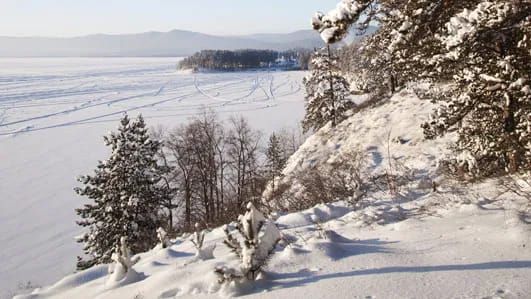
(January 5, 1709): The arrival of the Great Frost
Europe's coldest winter in 500 years began to take hold on this day in 1709. It would kill hundreds of thousands of people, make travel and trade nearly impossible, and disrupt two wars. Climatologists are still trying to understand the cause of what became known as the Great Frost.