- Basedment
- Posts
- Trump and Putin Summit: What to expect
Trump and Putin Summit: What to expect
Your daily dose of geopolitical updates and strategic analysis. Unbiased, but not unbased.

Editor-in-Chief
August 09, 2025
THE BRIEFING
Here’s what’s happening in geopolitics today.
From Israel’s push to seize Gaza City and a $3 million lobbying deal between Myanmar and Washington, to Cambodia nominating Donald Trump for a Nobel Peace Prize, major geopolitical shifts are playing out across regions.
The U.S. prepares to host Armenia and Azerbaijan for a landmark peace signing, while Pakistan reports killing 33 militants in a tense border clash with Afghanistan.
In today’s deep dive, we break down the upcoming meeting between Putin and Trump and what we can expect.
THE LAST 24 HOURS IN GEOPOLITICS
1. Israel’s security cabinet approves plan to take control of Gaza City
Israel’s political-security cabinet approved a plan on Friday to take control of Gaza City, a major escalation in the nearly two-year war with Hamas. Prime Minister Netanyahu emphasised the move isn't meant for permanent occupation, intending to hand over administration to unspecified Arab forces once a secure perimeter is established. The plan drew strong criticism both domestically and internationally, with military leaders warning that it could jeopardise the remaining hostages and deepen the humanitarian crisis in Gaza.
read more
2. Myanmar signs deal with Washington lobbyists to rebuild US relations
A Washington lobbying firm (the DCI Group) has signed a $3 million per year contract with Myanmar’s Ministry of Information to help rebuild ties with the United States, according to filings under the Foreign Agents Registration Act. The agreement, inked on July 31 alongside the nominal transfer of power to a civilian-led interim government, is aimed at enhancing cooperation on trade, natural resources, and humanitarian aid, even as U.S. sanctions against Myanmar remain in place.Observers note the move could signal a shift in Myanmar’s diplomatic posture to one that sees its leaders exploring Washington’s strategic engagement amid ongoing isolation.
read more
3. Cambodia nominates Trump for Nobel Peace Prize following truce with Thailand
Cambodian Prime Minister Hun Manet announced on Thursday that he has officially nominated former U.S. President Donald Trump for the Nobel Peace Prize, praising his “extraordinary statesmanship” that helped secure a ceasefire between Cambodia and Thailand following this summer’s deadly border skirmishes. Trump’s July 26 call to the leaders of both countries played a critical role in breaking the stalemate and leading to a truce agreed upon in Malaysia two days later, ending one of the most intense conflicts both nations have seen in years. Cambodia’s deputy prime minister had already hinted at the nomination last week, citing both the peace effort and Washington’s tariff relief on Cambodian exports as acts of support deserving recognition.
read more
4. Trump to sign peace deal to end Armenia, Azerbaijan fighting
Azerbaijan and Armenia are set to sign a preliminary peace agreement on Friday at the White House, the U.S. said, aiming to enhance economic ties after decades of conflict in the South Caucasus. The agreement will grant the U.S. exclusive development rights to a strategic transit corridor through the region intended to catalyze infrastructure investment and regional cooperation. U.S. officials say this marks the first resolution of a frozen conflict on Russia's border since the Cold War, setting the stage for broader economic integration.
read more
5. Pakistan says troops kill 33 militants crossing from Afghanistan
Pakistani security forces say they killed 33 militants attempting to cross into Pakistan from Afghanistan overnight, branding them as "Indian-sponsored" and intercepting them with “precise” fire that recovered weapons, ammunition, and explosives. The claim underscores long-standing tensions between nuclear-armed neighbors Pakistan and India, with New Delhi once again denying any involvement in supporting militants. The development raises fresh concerns about cross-border instability and the growing politicisation of insurgent activity in the region.
read more
DAILY DEEP DIVE
TRUMP AND PUTIN SUMMIT
Putin’s Goals
Putin and Trump may soon meet for the first time since Trump returned to office, though prospects for ending the war remain limited, as Russia and Ukraine remain far apart on their demands. At present, Russia holds most of the conventional leverage. Its forces are on the offensive, making daily gains, and control roughly 70 percent of the oblasts it claims as rightful Russian territory.
Given Russia’s current operational momentum, it is unlikely that Putin would agree to long-term settlement terms at this stage, as continued advances could further strengthen his negotiating position. Russia’s stance has been consistent for years: full control over the oblasts of Zaporizhzhia, Kherson, Luhansk, and Donetsk. Battlefield setbacks in 2022 forced Putin to adjust his immediate objectives, leading to the annexation of these four provinces via some dodgy referendums. Moscow now insists that Ukraine accept these “geopolitical realities” as the basis for any talks.
In the broader geopolitical context, Putin’s objectives have included the demilitarization and “denazification” of Ukraine, preventing NATO membership, and securing expansive territorial control. In his view, the first step toward peace is full control over the four contested oblasts, after which he may be willing to discuss further guarantees such as a formal bar on Ukrainian NATO membership. Expectations for the upcoming meeting are low. Some Western officials argue that Putin uses negotiations to buy time for additional territorial gains, though such meetings also provide him with an opportunity to gauge Trump’s intentions directly.
Trump’s Goals
Trump has repeatedly stated that he wants to end the conflict, claiming it would not have occurred had he been president in 2022. He frames the war as “Biden’s war” and positions himself as a dealmaker capable of securing a settlement. As discussed in a previous deep dive, Trump prefers bilateral deal-making over multilateral processes.
He is likely to seek concessions from Russia that are modest enough for Putin to consider but substantial enough to claim progress. Possible outcomes discussed by analysts include a commitment to no NATO membership for Ukraine and the creation of a demilitarized zone along the current front line. Domestically, such a settlement would support Trump’s political positioning, allowing him to shift attention away from ongoing controversies, including the Epstein case. The way Trump sees it, this war has to end no matter what. His campaign was heavily emphasised on ending the war, regardless of the specific terms.
A bonus note to consider, Trump’s foreign policy approach remains unpredictable. This was illustrated just today when his self-imposed deadline for Russia to cease hostilities expired; when asked about next steps, he responded that the matter was “in Putin’s hands.” Policies can quickly change under Trump, he has used his unpredictability to his advantage in previous bilateral discussions. It’s another reason why Putin would want to sit down with him to gauge him personally. There are also indications of internal divisions within his administration regarding Ukraine policy, coupled with a limited grasp of operational realities on the ground.
Ukrainian Public Opinion
A new Gallup poll shows a marked shift in Ukrainian public sentiment: approximately 70 percent now support pursuing a negotiated settlement as soon as possible, compared with around 75 percent in 2022 who favored fighting until victory. Support for continuing the war has declined across all regions and demographics. The survey excluded roughly 10 percent of the population living in Russian-controlled territory.
Despite this shift, most Ukrainians remain skeptical about an imminent peace. Only one-quarter believe that fighting could end within the next year, while the majority expect hostilities to continue. The poll was released shortly before Trump’s Friday deadline for Russia to halt the war or face further economic sanctions. President Zelenskyy has reiterated his willingness to meet with Putin, but Russia continues to insist on its existing terms.
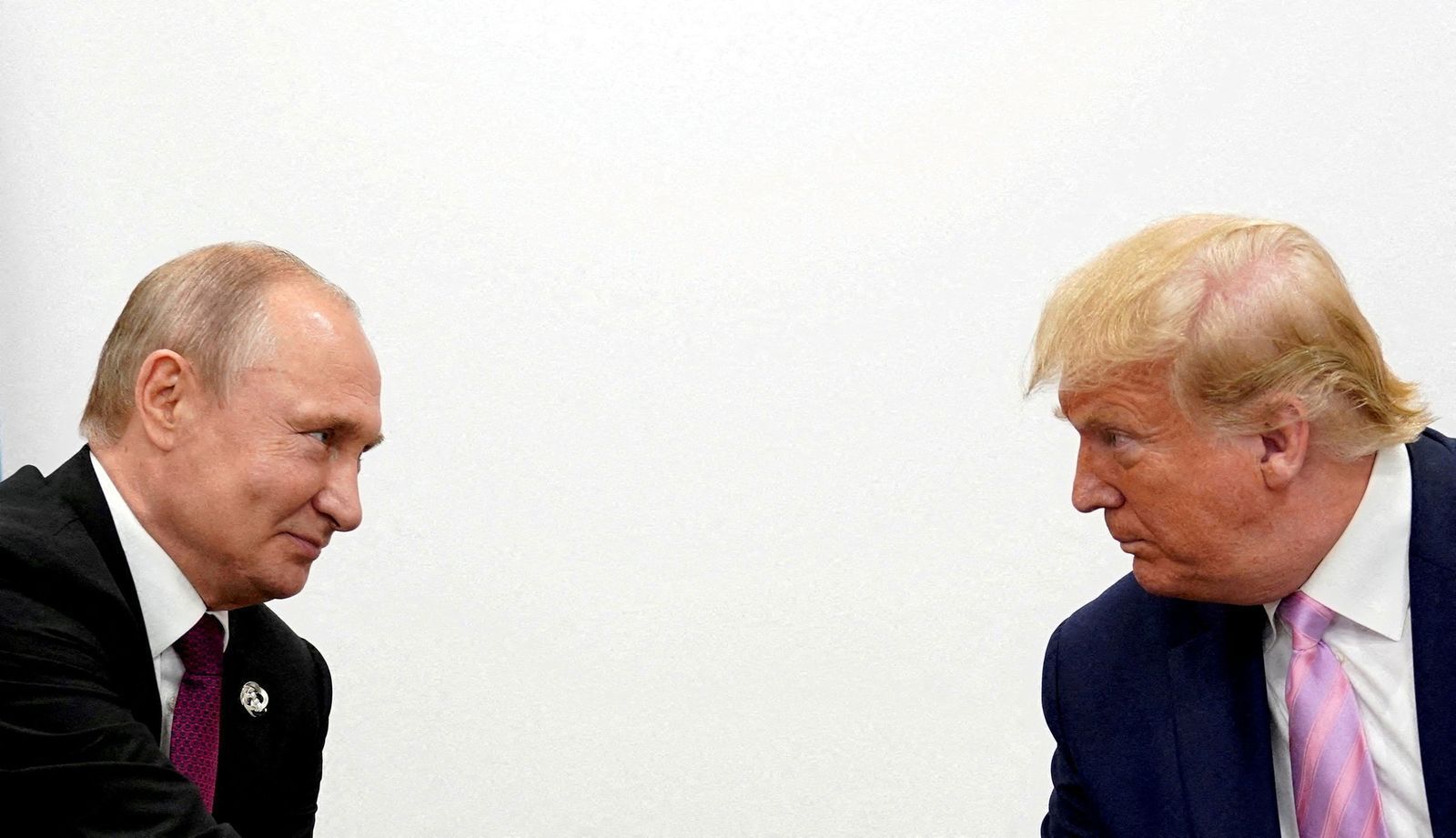
Context: Putin and Trump meet in 2019
Sources:
References available upon request. A full citation list has been omitted to preserve the visual integrity of the page.
Map sources: SuriyakMaps on Telegram
TWEET OF THE DAY
The White House Content Creator deserves a raise…
They don't know it yet, but in just 200 days, Trump has made America stronger, safer, and better for them, their kids, and their grandkids. 🇺🇸
— The White House (@WhiteHouse)
2:30 AM • Aug 8, 2025
TODAY IN HISTORY
(August 8, 1974): Resignation of U.S. President Nixon.
Faced with the near-certain prospect of impeachment for his role in the Watergate scandal, U.S. President Richard M. Nixon announced his resignation on this day in 1974 and was succeeded by Gerald Ford the following day.
