- Basedment
- Posts
- Trump’s Gamble on National Revival: A Shift Away From China?
Trump’s Gamble on National Revival: A Shift Away From China?
Your daily dose of geopolitical updates and strategic analysis. Unbiased, but not unbased.

Editor-in-Chief
September 22, 2025
THE BRIEFING
Here’s what’s happening in geopolitics today.
Venezuela’s Maduro is reaching out to Trump after a U.S. strike on a suspected drug boat, while Trump himself joined thousands in Arizona for a memorial to Charlie Kirk.
The UK, Australia, Canada, and Portugal have officially recognised a Palestinian state, Israel launched a drone strike in southern Lebanon that killed five, and Syria’s president arrived in New York for the UN General Assembly. He is the first Syrian leader to attend UN meetings since 1967.
In today’s deep dive, we’re examining the Pentagon’s alleged shift toward a homeland-first strategy, a move that could mark the end of America’s unipolar era.
THE LAST 24 HOURS IN GEOPOLITICS
1. Venezuela’s Maduro writes to Trump after U.S. strike on drug boat
Venezuelan President Nicolás Maduro has written to Donald Trump proposing direct talks via Trump’s special envoy Richard Grenell, following U.S. military strikes on Venezuelan vessels accused of drug trafficking. In the letter, Maduro firmly denied U.S. claims that his government is deeply involved in the drug trade, saying Venezuela destroys most of the drugs allegedly shipped through its territory. He also called for peaceful relations and urged that their disputes be cleared up through dialogue rather than escalating conflict.
read more
2. Trump joins thousands at memorial for Charlie Kirk in Arizona
Trump and tens of thousands of mourners gathered Sunday in Glendale, Arizona, at a memorial honouring conservative activist Charlie Kirk, whom Trump called a “martyr for American freedom”. The event blended worship, patriotism, and politics, with speeches from key Republican figures including Vice President J.D. Vance, and Kirk’s widow speaking of forgiveness toward the man accused of killing him. Trump used the platform to warn of threats he blames on the “radical left” and to frame Kirk’s death as part of a broader ideological battle over free speech and values in America.
read more
3. UK, Australia, Canada and Portugal recognise Palestinian state
Britain, Canada, Australia, and Portugal all officially recognised a Palestinian state on Sunday, a move driven by frustration over the Gaza war and an attempt to reignite international support for a two-state solution. Netanyahu denounced the decision as “a reward to terrorism,” arguing that recognising Palestine now undermines Israeli security and rejects the conditions he says must be met first. Palestinian leaders welcomed the recognition, calling it a long-overdue moment of justice and hope for coexistence, even while noting practical obstacles like hostages and governance that still lie ahead.
read more
4. Israeli strike kills five people, including children, in Southern Lebanon
An Israeli drone strike in Bint Jbeil, southern Lebanon killed five people on Sunday, including three children, Lebanon’s Health Ministry reported. Two others were wounded, among them a woman described as the children’s mother. Israeli authorities say the target was a Hezbollah militant allegedly operating within a civilian area and have acknowledged civilian harm as they investigate the strike.
read more
5. Syrian president arrives in US for General Assembly for first time in nearly 60 years
Syrian President Ahmad Al-Sharaa has arrived in New York to take part in the United Nations General Assembly, marking the first time a Syrian president has participated since 1967. Since being recognised by President Trump in Riyadh earlier this year, al-Sharaa has seen several sanctions eased, and his government is using this trip to push for further diplomatic reintegration and aid relief. He is expected to address the Assembly on Tuesday and hold bilateral meetings with world leaders, which will test how far the international community is prepared to engage with Syria after years of isolation.
read more
DAILY DEEP DIVE
IS ‘AMERICA FIRST’ THE RIGHT MOVE TO MAKE?
Trump’s first term and the Biden administration prepared the military for conflict with China. Now the Pentagon is shifting to prioritise the homeland and Western Hemisphere, according to Politico sources. Reversal from the 2018 strategy that made Beijing and Russia the top threat. This reflects a more isolationist approach, aligned with Vice President JD Vance’s push to scale back foreign commitments.
Early signs are visible: National Guard units deployed in U.S. cities, the Navy running “anti-cartel” missions. It looks like a return to the Monroe Doctrine era. Allies, meanwhile, face hard questions as USAID is cut and the funding for the Baltic Security Initiative may disappear.
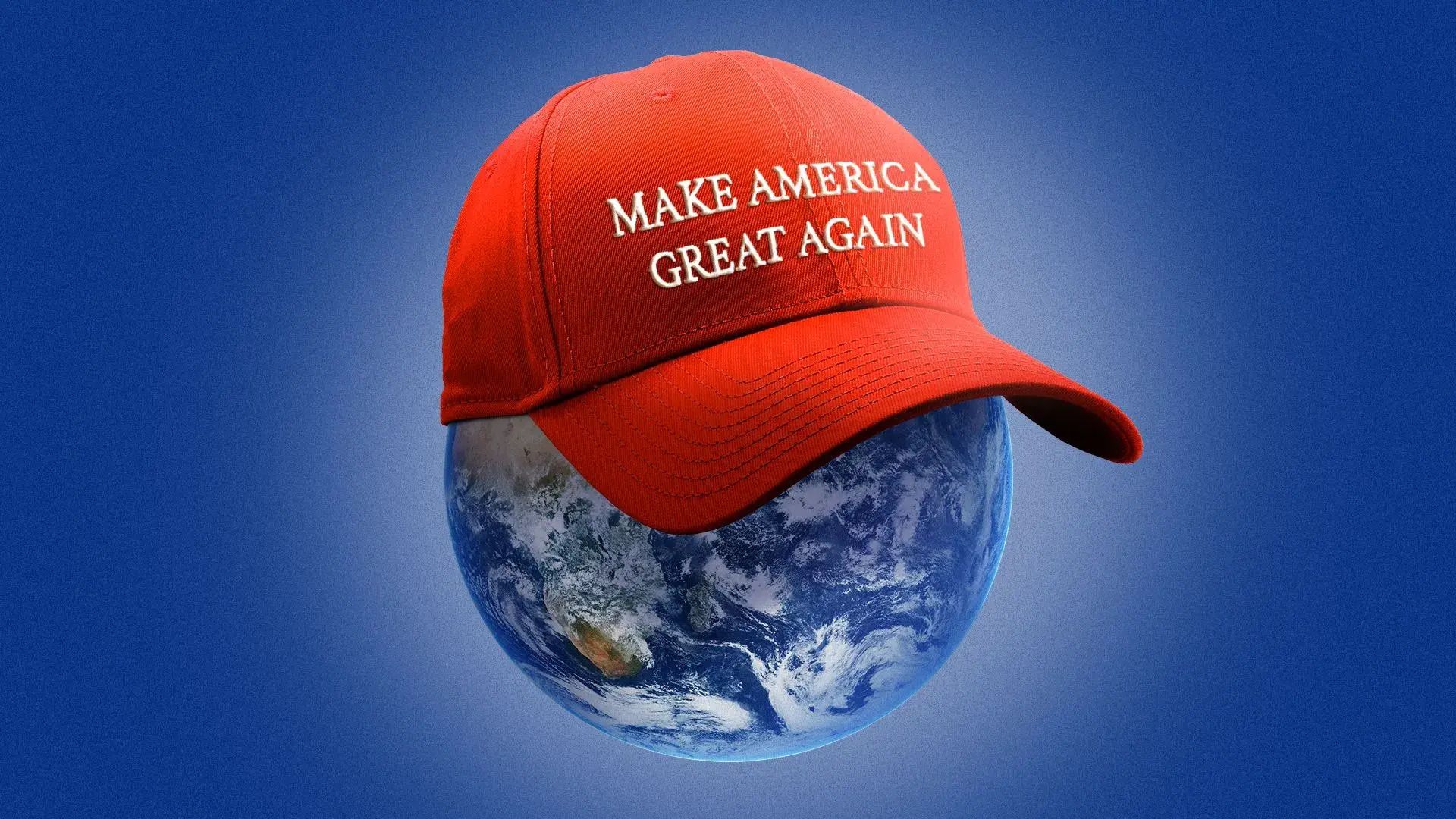
The first Trump term was marked by tension, isolationist slogans like “Make America Great Again” contrasted with preparations for war with China, pushed by neo-con hawks. But the Republican Party has changed. “Trumpism” now dominates, betting that American industry can be rebuilt while dismantling the international system the U.S. itself created. It’s a gamble unlikely to be realized within a single term. But the mid-19th and early 20th century Monroe America was a simpler time. America also needs to reckon with leaving an international system it helped found. It was Woodrow Wilson who drove the liberal initiative that fostered democratic cooperation. Today, the Trump administration is dismantling many of the braces that have held together the Western-led order for nearly a century. It is a gigantic gamble, one that may not be possible within a single four-year term.
THE ARGUMENT FOR AND AGAINST
The case for a homeland-first strategy begins with the argument that domestic stability is the bedrock of global power. A military cannot project strength abroad if its own society is fraying. The deployment of National Guard units to major cities such as Los Angeles and Washington highlights how seriously Washington views internal security challenges. Border control, organized crime, and political unrest are no longer seen as peripheral issues but as central to America’s ability to operate abroad. The logic is clear: without a secure base, there is no sustainable global strategy. Yet, if we take the Charlie Kirk assassination as an example, American society remains as divided as ever. Simply deploying the National Guard will not mend these fractures. What’s needed is a broader cultural revival and even then, it may be too late, as the monster is already out of the bag. The Trump administration’s current use of “hate speech” as a political weapon, the very tactic many warned the left would eventually be turned against them, suggests that neither side is truly interested in healing the divide.
Advocates also point to the dangers of overextension. After two decades of war in Iraq and Afghanistan, the United States has little to show for its sacrifices beyond financial strain, veteran fatigue, and disillusioned allies. Pulling back promises to ease the fiscal burden, reduce casualties, and finally force allies to shoulder greater responsibility for their own security. In this view, a recalibration at home is not a weakness but a correction after years of strategic drift. However, the increased budget of the U.S military and growing influence of tech corporations is beginning to raise these same questions again
There is also a deeper political current at play. Many Americans, along with leaders such as Vice President JD Vance, accept that China poses a challenge but reject the notion that it justifies endless deployments and global commitments. For this camp, prioritizing the homeland is not retreat but realignment, a way to avoid sliding into yet another open-ended confrontation that drains resources without delivering decisive results.
Yet the counterarguments carry weight. A retrenchment of U.S. forces signals retreat to allies who have long relied on the American umbrella. The prospect of cuts to the Baltic Security Initiative and possible troop withdrawals from Europe suggest NATO’s credibility is eroding. Moscow and Beijing are unlikely to ignore these signals; adversaries test boundaries when deterrence weakens. Critics also argue the strategy contradicts basic deterrence logic. China and Russia do not stop being threats simply because Washington looks inward. If U.S. forces pull back, others will move into the vacuum, whether Russia in Eastern Europe, China in the Indo-Pacific, or Iran across the Middle East. For many strategists, the cost of forward presence is far less than the cost of wars triggered by unchecked aggression.
Our Assessment
In theory, the Trump administration’s push to prioritise the nation itself carries real appeal. Many argue America has long sacrificed domestic needs for foreign interests, and a recalibration inward feels overdue. In practice, the vision is already shaped by entrenched interests from tech corporations influencing policy to the ever-powerful AIPAC lobby keeping foreign agendas firmly embedded in Washington. Add to this the Trump team’s mixed messaging and a toxic partisan climate, and the strategy risks looking less like a national revival and more like a muddled gamble. The deeper question is whether America is truly ready to abandon its unipolar role and place trust in allies to contain traditional adversaries. This plan represents a monumental geopolitical shift, one that could easily unravel if Democrats return to power and restore the old order.
Sources:
Sources available upon request, not shown to maintain visual integrity of page.
TWEET OF THE DAY
All thanks to AI/Data Centres right!…?
U.S. Electricity Prices Are Surging
— NewsWire (@NewsWire_US)
10:46 PM • Sep 20, 2025
TODAY IN HISTORY
(September 22, 1980): Solidarity formed
Solidarity, the Polish trade union and political party that became a hotbed of resistance to Soviet control, was founded this day in 1980 when delegates of 36 unions met and united under the leadership of Lech Wałęsa.