- Basedment
- Posts
- UAE Backed Offensive In Yemen
UAE Backed Offensive In Yemen
The UAE-backed STC’s rapid takeover of southern Yemen marks one of the most significant power shifts in the country since the civil war began, reshaping regional influence, maritime control, and the future of Yemen’s statehood.

Editor-in-Chief
December 10, 2025
THE BRIEFING
Here’s what’s happening in geopolitics today.
Tensions are running high across multiple fronts today, from Kyiv finalising a new peace plan and ruling out any territorial concessions to joint Russian–Chinese bomber patrols rattling Tokyo.
In the U.S., long-sealed Epstein grand jury files are set to be released, while Australia rolls out its world-first social-media ban for teens. And as border fighting flares again between Thailand and Cambodia, Trump says he’s picking up the phone to try to shut it down.
In today’s Deep Dive, we break down how the STC’s southern advance, backed by the UAE’s expanding footprint, is reshaping Yemen’s map and accelerating Abu Dhabi’s rise across the Red Sea.
A WORD FROM OUR SPONSOR
200+ AI Side Hustles to Start Right Now

While you were debating if AI would take your job, other people started using it to print money. Seriously.
That's not hyperbole. People are literally using ChatGPT to write Etsy descriptions that convert 3x better. Claude to build entire SaaS products without coding. Midjourney to create designs clients pay thousands for.
The Hustle found 200+ ways regular humans are turning AI into income. Subscribe to The Hustle for the full guide and unlock daily business intel that's actually interesting.
THE LAST 24 HOURS IN GEOPOLITICS
1. Ukraine prepares new peace plan as Zelenskyy rules out giving up land
Zelenskyy announced that Kyiv is preparing to present a revised peace plan to the U.S., rejecting a previous proposal that would have required territorial concessions to Russia. Zelenskyy reaffirmed that under Ukrainian law, constitution, and international obligations, Ukraine “has no legal or moral right” to surrender land, making territorial swaps a non-starter for any serious ceasefire agreement. The announcement comes amid renewed diplomatic efforts with European allies and U.S. mediators, with Kyiv seeking a deal that ensures sovereignty and strong security guarantees rather than forced compromises over territory.
read more
2. US judge approves bid to unseal Epstein grand jury documents
A U.S. federal judge has approved the release of previously sealed grand jury records from the Jeffrey Epstein/Ghislaine Maxwell sex-trafficking case, allowing un-redacted and related investigative files to be made public under a new statute. The decision follows the passage of the Epstein Files Transparency Act, which overrides long-standing grand jury secrecy rules and requires the Justice Department to publish unclassified materials in Epstein-related investigations. While the judge cautioned that the documents do not necessarily contain dramatic new evidence, the unsealing marks a major step toward transparency in one of the most notorious criminal investigations in recent U.S. history.
read more
3. Australia begins enforcing teen social media ban in world-first crackdown
As of Today, Australia has begun enforcing a world-first law banning social-media access for anyone under 16, requiring major platforms such as TikTok, Instagram, Facebook, X and others to block under-16 accounts or face fines up to A$49.5 million. The ban is aimed at protecting youngsters from online harms such as cyberbullying, addiction, and exposure to harmful content, a move the government says is about reclaiming parental control in a hyperconnected age. While most major platforms have started complying, some young users have already posted farewell messages and critics warn the restrictions could drive teens toward unregulated sites.
read more
4. Russia bombers join Chinese air patrol near Japan as Tokyo-Beijing tensions simmer
Two Russian Tu-95 strategic bombers joined two Chinese H-6 bombers on a long-range joint air patrol near Japan this week, accompanied by Chinese J-16 fighter jets, a manoeuvre Tokyo described as a “show of force.” Japan scrambled its air force in response, with Defence Minister Shinjiro Koizumi saying the coordinated flight posed a serious national-security threat, prompting strict air-defence identification measures.
read more
5. Trump says he’ll make phone call to stop renewed Thai-Cambodia fighting
Trump said he will “make a phone call” to the leaders of Thailand and Cambodia in an attempt to stop renewed border fighting that has shattered a ceasefire he once helped broker. The renewed clashes have triggered fatalities on both sides and forced hundreds of thousands of civilians to flee their homes along the contested frontier. Trump framed the intervention as part of his “peace-through-strength” approach.
read more
DAILY DEEP DIVE
UAE-Backed STC Mark Major Offensive
Context
The UAE-backed Southern Transitional Council (STC) has executed one of its most significant territorial expansions in years, reshaping power dynamics across southern Yemen. Earlier this month, STC forces seized Seiyun in Hadhramaut — including key oil fields, energy installations, and PetroMasila, the country’s largest oil company — after brief clashes with Yemeni military units and local tribes. Their advance rapidly extended across Wadi Hadramout, a strategic corridor of cities, military bases, and infrastructure. STC units took the presidential palace, the international airport, and moved east toward Mahra on the Omani border.
Flags of the former South Yemen state were raised over government buildings, schools, and even border crossings. In Aden, hundreds rallied for full independence, waving portraits of STC leader Aidarous al-Zubaidi. The STC framed its offensive as a move to stabilise the south and counter smuggling networks, al-Qaida, IS militants, and the Iran-backed Houthis.
But the implications run far deeper. STC dominance now stretches across almost the entire southern half of Yemen — including critical coastline, Mayun Island in the Bab el-Mandeb chokepoint, and Socotra in the Indian Ocean. Analysts describe this as a “major shift” with the UAE emerging as the clear geopolitical winner. It dramatically expands Abu Dhabi’s influence over maritime routes, energy corridors, and future statehood questions.
Riyadh, however, is uneasy. Presidential Council chairman Rashad al-Alimi demanded the STC withdraw from recently seized areas, warning against “creating a parallel reality.” For Saudi Arabia, this is no longer a Yemeni issue — it’s a direct national security challenge.
UAE Expansion
Beyond its complex rivalry with Turkey, the UAE has spent the past decade constructing one of the most far-reaching geopolitical footprints in the Middle East. Abu Dhabi’s foreign policy is shaped by a core objective: preventing political Islam, Iranian expansionism, and regional instability from threatening its monarchy and economic model. This has driven the UAE to intervene — directly or through proxies — across nearly every major conflict zone since 2014.
In Yemen, the UAE built one of the region’s most capable proxy networks, backing the Southern Transitional Council (STC), seizing key ports, and establishing influence over strategic chokepoints like Socotra and the Bab el-Mandeb Strait. It developed a network of bases from Eritrea’s Assab port to Somaliland’s Berbera, giving Abu Dhabi leverage over Red Sea trade routes and access far beyond the Arabian Peninsula.
In Libya, the UAE funded and armed Khalifa Haftar’s LNA, seeing his anti-Islamist campaign as a buffer against both Turkish-backed militias and jihadist spillover. In the Horn of Africa, Abu Dhabi invested heavily in Ethiopia and Sudan while simultaneously supporting rival actors — a hallmark of its hedging strategy.
Taken together, the UAE has evolved into a mini-great power: projecting force, shaping political orders, and competing for influence from the Mediterranean to the Indian Ocean.
As Of The Last 12 hours
As of right now, we have to consider how this will change the relationship between the UAE and the Saudi’s. With the sudden push and success, we may be seeing an agreed upon restructuring of geopolitical influence in region by the Saudis and UAE.
According to OSINT blogger @AfriMEOSINT, UAE-aligned STC units have quietly pushed additional forces into Mahra, tightening their grip in a move that Riyadh is pushing back against. At the same time, STC formations are withdrawing from multiple positions in Hadramout and shifting east toward Shabwa for a broader redeployment. In response, Saudi-backed NSF elements have begun moving sizeable troop convoys across Wadi Hadramout. Was there some kind of agreement reached regarding Hadramout? Possiblly, but we might not be anywhere near a ceasefire agreement given STC is pushing into Mahra.
Note:
Hadramout is the area north Tarim and around Thamud and west of Rumah. Whilst Mahra is the province bordering Oman to the east. Also note, when it comes to these types of terrain, mapping accurately becomes difficult. There are other maps showing different situations, but the important thing to note is who controls the population centres.
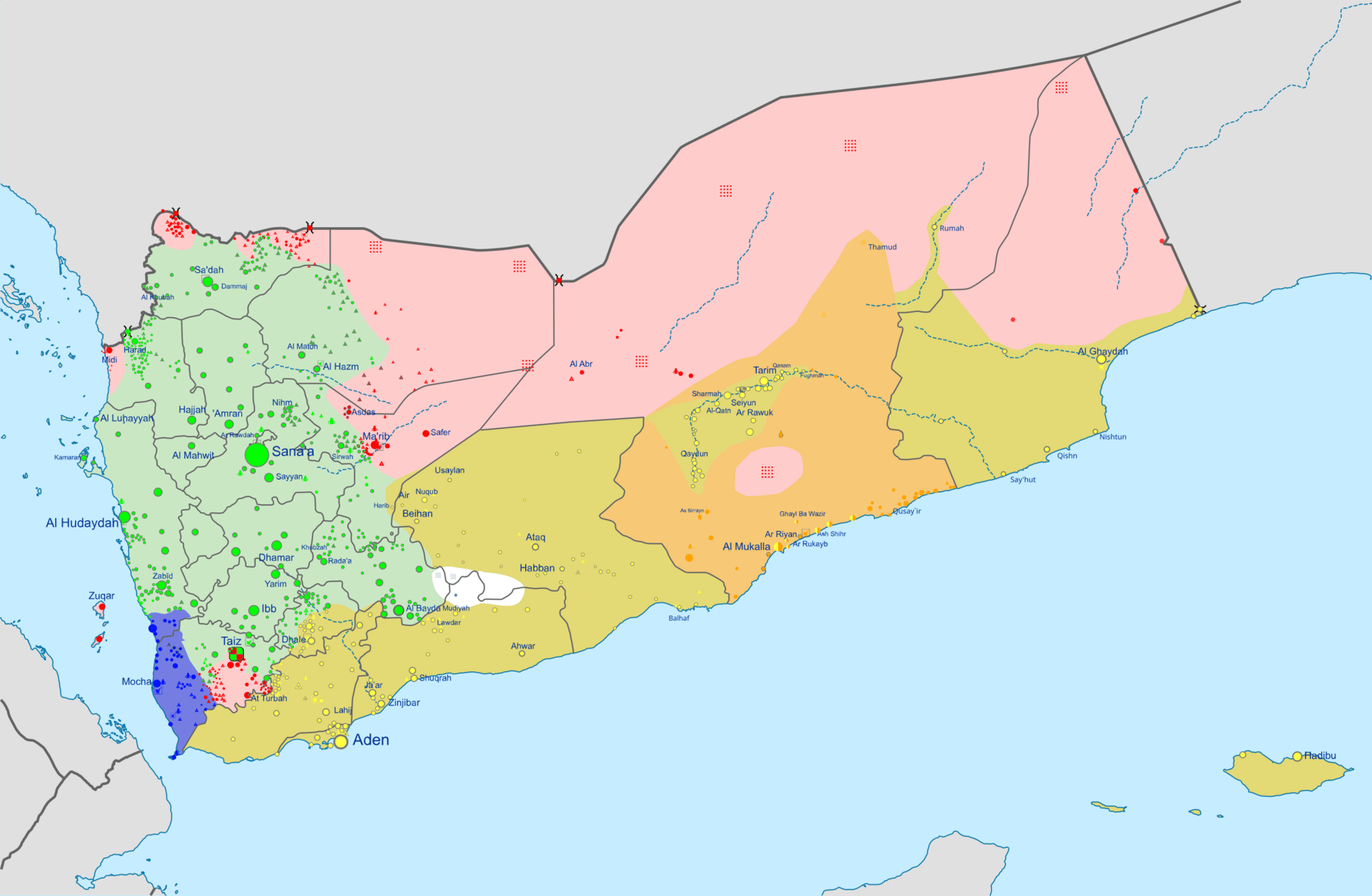
Wikipedia Map / AfriMEOSINT
RED: Pro-PLC / Republic of Yemen (UN-recognised):
Yemeni Armed Forces
General People’s Congress
Yemeni National Resistance
YELLOW/ORGANGE/BLUE: Southern Transitional Council (STC):
STC main forces
Hadhrami Elite Forces (pro-STC)
GREEN: Houthi / Supreme Political Council (SPC):
Pro-SPC Yemeni Armed Forces
Houthi units
WHITE:Non-state armed groups:
Al-Qaeda in the Arabian Peninsula (AQAP)
Sources:
News/Journal sources available upon request, not shown to maintain visual integrity of page.
TODAY IN HISTORY
(December 10, 1932): The Emu War
The Australian government officially surrendered on this day in 1932 after a monthlong battle against thousands of large flightless birds.
