- Basedment
- Posts
- Ukraine: Battles Waged Underground
Ukraine: Battles Waged Underground
Your daily dose of geopolitical updates and strategic analysis. Unbiased, but not unbased.

Editor-in-Chief
September 04, 2025
THE BRIEFING
Here’s what’s happening in geopolitics today.
Here’s a look at the stories shaping the global agenda today. From Trump weighing in on Elon Musk’s political future to Vietnam launching a public fund for its armed forces, the news spans politics, security, and global alliances.
We’re also watching Poland’s airspace concerns, continued U.S. operations against Latin American cartels, and Nigeria’s latest strike against Islamist militants.
Today we take a deep dive, literally, into the underground battles of Ukraine.
THE LAST 24 HOURS IN GEOPOLITICS
1. Trump says Elon Musk ‘has no choice’ but to return to Republican Party
President Trump said on The Scott Jennings Show that Elon Musk “has no choice” but to return to the Republican Party, dismissing alternatives as aligning with “radical left lunatics”, while also calling Musk “80% super-genius” and conceding that the remaining “20%… he’s got some problems”. The feud between the two once-close allies erupted earlier this year over Musk's opposition to the Republican-backed “Big Beautiful Bill” and his floated idea of starting a third political.
read more
2. Vietnam opens fund for public donations to support Armed Forces
Vietnam has established a new public donation fund to support its armed forces and diplomatic operations, a rare move announced just days after the country’s grand independence-day military parade. This setup allows citizens and organisations to contribute directly, reflecting both heightened nationalism and a growing role for public support in defence. The fund underscores how Vietnam is increasingly engaging society in national security amidst broader modernisation and strategic outreach.
read more
3. Poland says two drones enter airspace, cause no damage
Poland’s army confirmed that two drones briefly entered its airspace overnight from Tuesday into Wednesday, but did not engage them as they posed no threat, and both quickly exited the area under full control of military units. The military emphasised that the drones caused no damage and were managed without incident, reflecting heightened vigilance near NATO’s eastern flank given past airspace violations.
read more
4. Trump administration says more operations against cartels coming
Senior U.S. national security officials confirmed on Wednesday that military operations targeting drug cartels in Latin America will continue, even as key legal and operational questions linger around Tuesday’s deadly strike on a Venezuelan vessel that killed 11 people, allegedly members of the Tren de Aragua gang. Defence Secretary Pete Hegseth described the effort as a “deadly serious mission,” warning that other designated narco-terrorists operating in the region “will face the same fate”.
read more
5. Nigerian airstrike kills over 15 militia in Sambisa forest hideout
Nigeria’s air force said it struck an Islamist insurgent hideout near the Sambisa Forest in Borno State overnight, killing more than 15 militia fighters in a precision operation. The target was a suspected gathering of militants likely preparing attacks, and the action reflects the military’s intensified efforts to counter ongoing threats from groups like Boko Haram and ISWAP in the northeast.
read more
DAILY DEEP DIVE
UNDERGROUND WARS
PORKVOSK PIPELINE
Yesterday, Russian Telegram channels released a video showing DRG units moving through an underground pipe allegedly located beneath Pokrovsk. It was claimed that the footage was recent and that this tactic had assisted Russian forces in re-securing parts of the southern districts of the city.
We believe there is a strong chance the video is indeed recent, based on the roller board one of the soldiers was using. This device has only recently been showcased on social media a few weeks ago, designed specifically to ease movement through narrow pipes and eliminate the need to crawl, suggesting the footage reflects a new adaptation in the field.
(this video has been posted to our instagram)
PIPELINE TACTICS
The reality is that this tactic works, though it is extremely high risk and often carries a very high death rate for the attackers who use pipelines. It can be described as a form of modern-day tunnel warfare, reminiscent of the tactics seen in World War I.
We first saw it at Avdiivka, one of the fortress cities in central Donetsk that had sat on the frontline since the separatist movement began more than a decade ago. Its fortifications, (trenches, bunkers reinforced with concrete, and barbed wire)were long considered impenetrable. For years, they could not be breached. Russian forces had already lost hundreds trying to force an encirclement on the flanks, attempting to create a pincer to avoid the kind of brutal losses suffered in Bakhmut when they attacked head-on. But this, too, proved equally bloody. Ukrainian defences were formidable, and thousands were killed in the battles to break through the western and eastern flanks of Avdiivka.
Then one day reports came of a breakthrough past the strongest defences, in an operation kept secret for over a year using a pipe. Scouts discovered the pipe earlier, but initial attempts to cut passages failed due to oxygen shortages, requiring ventilation shafts. Flooding further delayed the plan. Engineers masked their work under artillery and mortar fire until the route was ready. Recently, Russian troops completed the daring infiltration, emerging in the Ukrainian rear. They disrupted and cut off significant fortifications, capturing several Ukrainian soldiers while eliminating others, marking a rare tactical success achieved through long-term preparation and persistence.
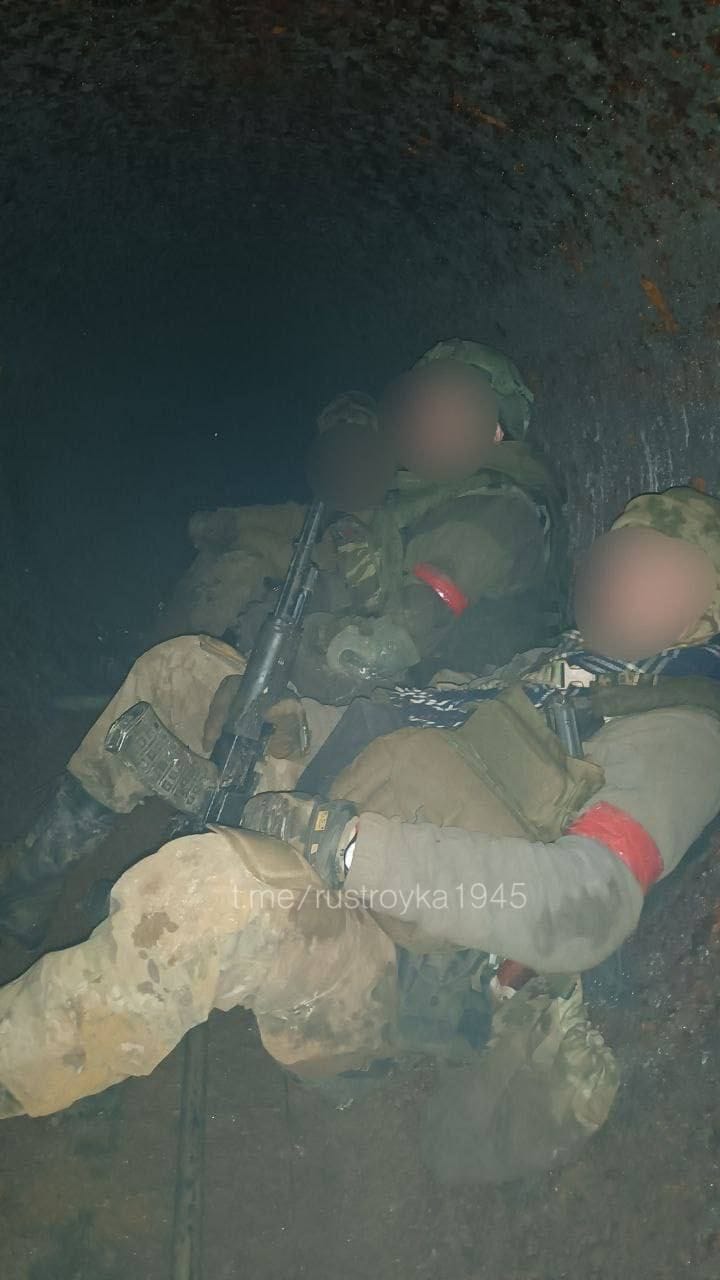
The famous photo of Russian soldiers underneath Avdiivka
In the northeast of Sudzha, around 100 Russian soldiers launched a stealth assault on Ukrainian rear positions by entering through sections of the “Urengoy-Pomary-Uzhgorod” gas pipeline, which until January 1, 2025, had carried Russian gas to Europe via Ukraine. The operation was preceded by several days of preparation, with Russian forces using guided bombs (FAB with UPBK) to clear the area from which they would advance. Ukrainian media reported that, due to strained logistics, defenders were unable to destroy the pipeline beforehand.
The assault was carried out largely by DRG units and came at a very high cost in manpower, with many suffering heavy casualties during the infiltration. Nevertheless, their persistence allowed pressure to build and eventually fracture sections of the Ukrainian defence. This breakthrough exposed vulnerabilities in the line and enabled follow-on forces to push deeper.

Russian soldiers clearing the Sudzha pipeline.
CONCRETE TUNNEL DEFENCE
Many of the massive mines and industrial complexes built during Soviet times were designed with the expectation of a world war. They were not just factories, but fortified strongholds, engineered with deep, reinforced concrete tunnels and vast underground networks capable of withstanding bombardment.
Pokrovsk is no exception. Beneath the city lies a complex web of mining tunnels stretching across much of the suburbs. These underground passages provide natural defensive depth and are likely being utilised by Ukrainian forces today, much as they were in previous battles. The Mariupol defence at the Azovstal factory, where tunnel systems allowed protracted resistance, remains the most famous example of this Soviet-era legacy shaping the modern battlefield.
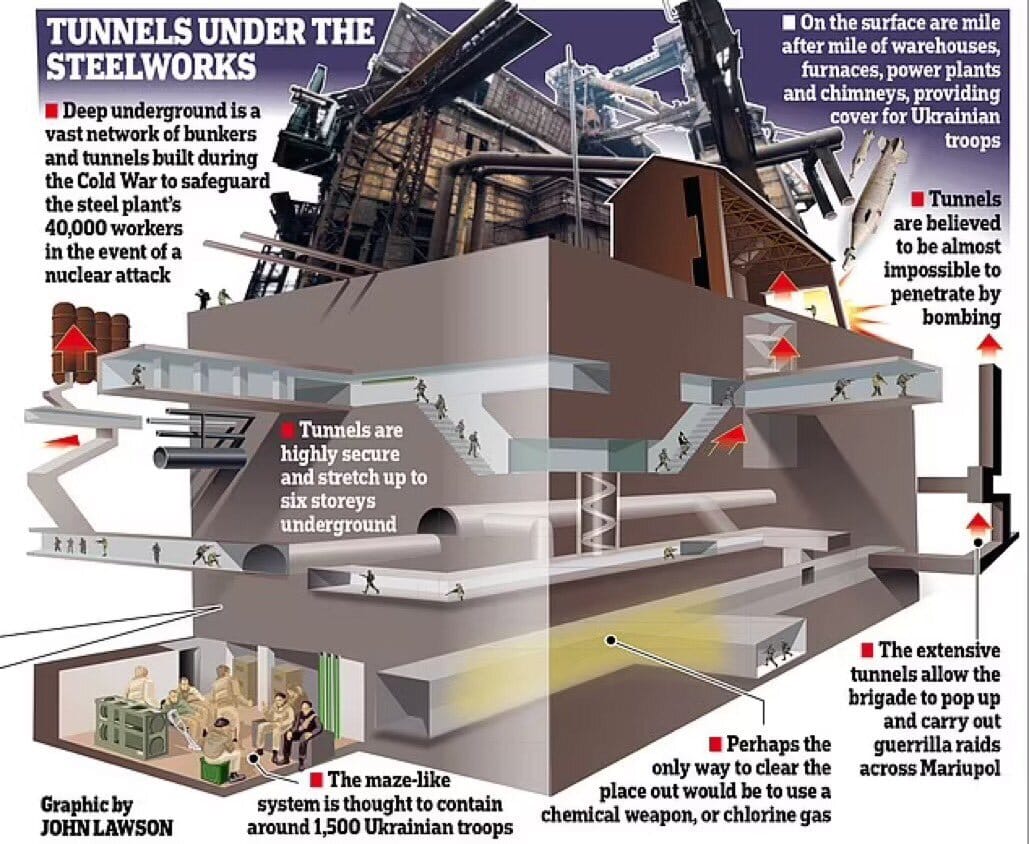
Sources:
Sources available upon request!
TWEET OF THE DAY
Here’s a meme for our Australian-based readers!
TODAY IN HISTORY
(September 4, 1781): Los Angeles founded
On this day in 1781, Spanish settlers laid claim to what became Los Angeles, now the second most populous U.S. city and the home to Hollywood, whose name is synonymous with the American motion-picture industry.