- Basedment
- Posts
- "Ukraine Is Losing The Drone War" - Former Ukrainian Commander
"Ukraine Is Losing The Drone War" - Former Ukrainian Commander
Today we take a deeper look into comments made by a former Ukrainian commander who argues Russia is winning the drone where it counts - in the rear.

Editor-in-Chief
January 21, 2026
THE BRIEFING
Here’s what’s happening in geopolitics today.
From oil tankers being seized in the Caribbean to CEOs and billionaires descending on Davos, it’s a day where geopolitics, money and muscle are all on display.
We’re also tracking high-level diplomacy between Trump and Erdogan on Syria and Gaza, a major court ruling in South Korea tied to last year’s martial law crisis, and rising tensions in South Asia as India pulls diplomats’ families from Bangladesh.
In today’s deep dive, we’re analysing comments made by a former Ukrainian commander who argues Russia is winning the drone where it counts - in the rear.
A WORD FROM OUR SPONSOR
But what can you actually DO about the proclaimed ‘AI bubble’? Billionaires know an alternative…

Sure, if you held your stocks since the dotcom bubble, you would’ve been up—eventually. But three years after the dot-com bust the S&P 500 was still far down from its peak. So, how else can you invest when almost every market is tied to stocks?
Lo and behold, billionaires have an alternative way to diversify: allocate to a physical asset class that outpaced the S&P by 15% from 1995 to 2025, with almost no correlation to equities. It’s part of a massive global market, long leveraged by the ultra-wealthy (Bezos, Gates, Rockefellers etc).
Contemporary and post-war art.
Masterworks lets you invest in multimillion-dollar artworks featuring legends like Banksy, Basquiat, and Picasso—without needing millions. Over 70,000 members have together invested more than $1.2 billion across over 500 artworks. So far, 25 sales have delivered net annualized returns like 14.6%, 17.6%, and 17.8%.*
Want access?
Investing involves risk. Past performance not indicative of future returns. Reg A disclosures at masterworks.com/cd
THE LAST 24 HOURS IN GEOPOLITICS
1. US says it seized seventh tanker in the Caribbean
U.S. military forces have seized a seventh oil tanker in the Caribbean Sea linked to Venezuela as part of the Trump administration’s ongoing effort to enforce sanctions and control Venezuelan oil exports, U.S. Southern Command said. The Liberian-flagged Motor Vessel Sagitta was boarded and taken control of “without incident” after allegedly operating in defiance of a U.S. quarantine on sanctioned vessels. The seizure marks the seventh such interdiction in recent weeks under the broader Caribbean operation, with Washington saying it aims to ensure that only properly coordinated and lawful oil shipments leave Venezuelan waters.
read more
2. Davos kicks off, billionaires and CEOs arrive at the WEF conference
The annual World Economic Forum (WEF) meeting has officially begun, drawing thousands of global leaders from politics, business and civil society to discuss economic, geopolitical and technological issues. Record participation this year includes close to 400 top government leaders alongside about 850 chief executives and chairs from major global companies. discussions are expected on topics such as innovation, AI, inequality and geopolitical tensions, including U.S. foreign policy and global security challenges. The meeting, held under the theme “A Spirit of Dialogue,” seeks to foster cooperation across sectors as participants navigate pressing global challenges amid economic uncertainty and shifting geopolitical dynamics.
read more
3. Erdogan, Trump discuss Syria ceasefire and Gaza in phone call
Erdogan and Trump held a phone call on Tuesday in which they discussed regional developments in Syria, including recent ceasefire and territorial integrity concerns, and ongoing efforts to advance peace in Gaza. Erdogan told Trump that Turkey is closely following the situation in Syria and emphasised the importance of Syria’s unity and stability, while both leaders also touched on the fight against ISIS and the status of detained fighters. On Gaza, Erdogan said Türkiye will continue to coordinate with the U.S. on peace efforts, and thanked Trump for inviting him to join the newly proposed Board of Peace initiative aimed at stabilising the enclave.
read more
4. South Korea court sentences ex-PM Han to 23-year jail term
A Seoul court has sentenced former South Korean Prime Minister Han Duck-soo to 23 years in prison for his role in the failed declaration of martial law in December 2024, ruling that he aided actions the court characterised as part of an insurrection tied to ex-President Yoon Suk-yeol’s attempt to impose martial law. Han was found guilty of key charges including insurrection, perjury and creating a false official document, with the judge saying he played a substantial role in legitimising the contentious cabinet meeting linked to the martial law bid.
read more
5. India to withdraw diplomats’ families from Bangladesh, source says
India has decided to withdraw the families and dependents of its diplomats and officials posted in Bangladesh, citing rising security concerns ahead of Bangladesh’s parliamentary election on February 12. New Delhi has designated Bangladesh as a “non-family” posting and advised dependents to return to India while all five Indian diplomatic missions in the country continue to operate at full strength. The move comes amid heightened unrest and protests in Bangladesh, with Indian officials describing the decision as a precautionary measure in response to threats from extremist elements and broader law-and-order challenges.
read more
DAILY DEEP DIVE
Is Ukraine Losing The Drone War?
Former Chosen Company commander Ryan O’Leary made a rather long X thread suggesting that Ukraine is losing the drone war. I will link the unrolled thread above (but you will have to translate it). Below I’ve done a summary of his main points.
Context
Former Chosen Company commander Ryan O’Leary argues that Ukraine is not losing the drone war where it is most visible, but where it matters most.
At the tactical level, Ukrainian units remain effective. Russian infantry is destroyed daily by FPV drones, producing steady attrition and constant battlefield pressure. But O’Leary’s warning is that this focus masks a deeper failure. The drone war, he argues, is not about how many soldiers are killed today, but about who controls space, movement, and decision-making tomorrow.
Russia grasped this earlier. Instead of using drones primarily as precision infantry killers, it reoriented them into a system designed to deny movement and logistics across operational depth. Roads, fuel routes, communications, ISR nodes, repair facilities, and drone crews themselves — particularly 10 to 40 kilometres behind the front — became priority targets. Systems like Rubicon were built for this purpose.
Ukraine, by contrast, still treats depth as unassigned terrain. Brigades hold trenches, but the rear remains structurally unmanaged. No unit formally “owns” the space behind the front. As a result, logistics slow, drone crews are attrited, and tempo collapses quietly — even as tactical engagements appear successful. So O'Leary's critique is not technological, Ukraine has drones and innovation. Yet the failure is doctrinal. Success is measured in kills because kills are visible, countable, and politically safe. But infantry is replaceable. Fuel, communications, logistics, repair capacity, and operational tempo are not.
The outcome is paradoxical: Ukraine wins tactically and loses ground. Russia loses manpower and gains freedom of movement. Until operational depth is formally defined, owned, and denied to the enemy, the drone war — regardless of scale — will remain strategically misaligned.
A few extra comments.
These points mainly apply to Ukraine’s own territory behind the front lines. However, Ukraine has also been conducting a highly successful campaign around and inside Crimea, primarily targeting Russian air defence assets. Largely carried out by the SBU, these strikes have destroyed S-400 systems, radar complexes, and associated infrastructure. Building on O’Leary’s argument, it feels as though Ukraine’s drone war reflects a broader level of decentralisation across the system as a whole.
Ukraine’s drone manufacturing ecosystem is far more decentralised than Russia’s, which brings both advantages and limitations. On the positive side, this structure enables targeted, high-impact operations like the campaign against Russian air defences in Crimea, where expensive and scarce systems are being systematically degraded. In this sense, decentralisation has allowed specialist actors like the SBU to punch far above their weight. On the other hand, this same decentralisation struggles to scale at the wider operational level O’Leary is describing, particularly when it comes to controlling depth and denying movement across entire sectors.
Russia, by contrast, has adopted a far more centralised drone doctrine. This is precisely why it has been more effective at “big picture” objectives such as controlling operational depth and rear areas. Drone production is also centralised, though this has generated its own problems. Longstanding issues of corruption and bureaucratic inefficiency have reportedly complicated delivery timelines and reduced the effectiveness of FPV systems, according to Russian sources.
The creation of Rubikon is the clearest example of Russia’s centralised approach. It has been a genuine game-changer: a drone formation designed to surveil, track, and systematically hunt Ukrainian drone teams, now increasingly expanding its focus to rear-area targets and logistics — exactly the kind of depth control O’Leary warns Ukraine is still struggling to institutionalise.
Sources
News/Journal sources available upon request, not shown to maintain visual integrity of page.
TODAY IN HISTORY
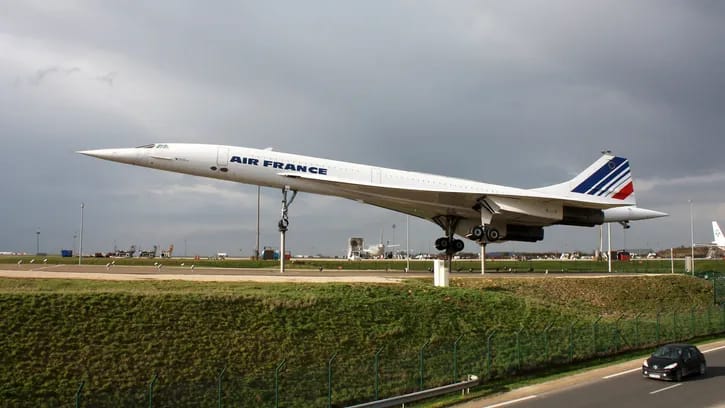
(January 21, 1976): First commercial Concorde flight
Generating a sonic boom as it traveled through the atmosphere at supersonic speed, the Concorde, a commercial aircraft built with funding from the British and French governments, began regular service on this day in 1976.