- Basedment
- Posts
- UN General Assembly: A Crisis of Relevance
UN General Assembly: A Crisis of Relevance
Your daily dose of geopolitical updates and strategic analysis. Unbiased, but not unbased.

Editor-in-Chief
September 22, 2025
THE BRIEFING
Here’s what’s happening in geopolitics today.
The UN Security Council will meet over Estonia’s airspace violation, thousands took to the streets in the Philippines to protest corruption, and the UK is preparing to formally recognise a Palestinian state.
Meanwhile, Trump has issued a warning to Afghanistan over Bagram Air Base, and Qatar’s Emir is headed to New York for the UN General Assembly.
The 80th UN General Assembly opens amid war in Gaza, great-power rivalry, and growing doubts about the UN’s relevance
THE LAST 24 HOURS IN GEOPOLITICS
1. UN Security Council meets Monday on Estonian airspace violation
The UN Security Council is set to meet on Monday in New York at Estonia’s request following the violation of its airspace by three Russian MiG-31 jets on September 19, an incursion Estonia claims lasted 12 minutes over Vaindloo Island. Tallinn says this is the first time in its 34-year UN membership that it has asked for an emergency session over such an incident, warning that Russia’s behaviour “undermines principles essential to the security of all UN member states.” The move comes amid broader regional concern over similar breaches and highlights the growing pressure on NATO and the UN to respond more forcefully.
read more
2. Thousands rally in Philippines in protest against corruption
Tens of thousands marched in Manila and elsewhere on Sunday, denouncing alleged corruption in government flood-control projects that critics say involved billions in over-priced, substandard, or ghost contracts. Authorities arrested 17 individuals after some protesters hurled rocks and set fire to tires near the presidential palace, though most demonstrations remained peaceful. President Ferdinand Marcos Jr. has accepted public anger, established an independent commission, vowed none will be spared in the probe, and urged protesters to remain nonviolent.
read more
3. UK set to recognise Palestinian state
The UK is set to formally recognise a Palestinian state, marking a major shift in its foreign policy under Prime Minister Keir Starmer. Deputy Prime Minister David Lammy confirmed the announcement, expected at the upcoming UN General Assembly, saying the move is aimed at bolstering the two-state solution amid the ongoing Israel-Hamas conflict. Despite opposition from the U.S. and Israel, Starmer argues that Israel has not met the conditions he laid out earlier, such as agreeing to a ceasefire, ending annexations in the West Bank, increasing humanitarian aid into Gaza, and committing to negotiations.
read more
4. Trump says ‘bad things’ will happen if Afghanistan doesn’t return Bagram air base
Trump warned on Saturday that “bad things are going to happen” if Afghanistan does not return control of Bagram Air Base to the United States, a facility the U.S. built and used for many years following the 9/11 attacks. He claimed discussions with the Taliban are underway but also left open the possibility of a military option should those talks fail. Afghan officials have already rejected U.S. demands, emphasizing their sovereignty and pushing back against renewed U.S. involvement in the country.
read more
5. Qatar’s Emir heads to New York to participate in UN General Assembly
Qatar’s Emir Sheikh Tamim bin Hamad al-Thani has departed for New York to take part in the upcoming United Nations General Assembly, the Amiri Diwan confirmed on Sunday. His trip comes at a time when the international spotlight is firmly on the Israel-Hamas war, with Gaza’s humanitarian crisis worsening and famine already beginning to take root according to global monitors.
read more
DAILY DEEP DIVE
The War in Gaza And The Relevancy Crisis Of The U.N
So far, the United Kingdom, Canada, and Australia have officially announced their recognition of the State of Palestine in the lead-up to the UN General Assembly. They are expected to be joined by France, Malta, and Luxembourg, marking a coordinated diplomatic effort to revive momentum for a two-state solution. This wave of recognition represents a significant shift in Western policy, placing new pressure on Israel as it faces mounting international criticism over its military operations in Gaza and the West Bank. With these developments setting the tone, much of this year’s UN meeting will inevitably be dominated by the war in Gaza, both the humanitarian crisis it has created and the broader debate over whether recognition of Palestinian statehood can provide a pathway to peace.
The reality is that these formal recognitions are more symbolic than filled with substance. These are last resort measures without beginning some form of sanctions, which countries will not aim to do to not upset the U.S or home soil jewish population. It can also be argued that this recognition will serve as a vote-winning positive for domestic audiences.
While international pressure seems to have no effect in ending the war in Gaza, internal divisions are beginning to be more apparent. The military leaders and intelligence agencies have raises opposition to the new assault on Gaza City and the recent aistrikes in Doha. With protests, corruption trials and now growing internal divisions it will be interesting to see how much grip on power Netanyahu really has.
The Shrinking UN
As world leaders gather in New York for the 80th session of the UN General Assembly, the meeting is set against a backdrop of war in Gaza, stalled diplomacy in Ukraine, and mounting doubts about the UN’s own relevance. One of the most significant developments heading into this week is the coordinated recognition of Palestine by Australia, the UK, and Canada, joining France, Belgium, and Portugal in what is intended as a collective push to revive momentum for a two-state solution. These announcements, timed with the assembly, increase diplomatic pressure on Israel, which faces growing isolation in Europe and beyond.
The UN, born out of the 1947 partition plan that created Israel, is struggling to reconcile its founding ideals with its inability to halt the humanitarian disaster in Gaza or restrain Israeli settlement expansion in the West Bank. Netanyahu’s government has dismissed recognition as a “reward for terrorism,” while critics at home and abroad argue Israel is drifting further into pariah status, likened to Apartheid-era South Africa. EU tariff measures, Spanish threats of sports boycotts, and Arab anger add to this mounting pressure.
At the same time, the UN itself confronts an identity crisis. Peacekeeping missions are shrinking, budgets are under assault, and U.S. President Donald Trump’s hostility to multilateralism dominates the agenda. By 2026, there will be a 15% budget cut and a 19% staff reduction. Many diplomats admit they are watching Trump’s speech more closely than the formal resolutions. Yet for smaller and mid-sized states, the UN remains one of the few platforms to push for accountability and coordination on global crises.
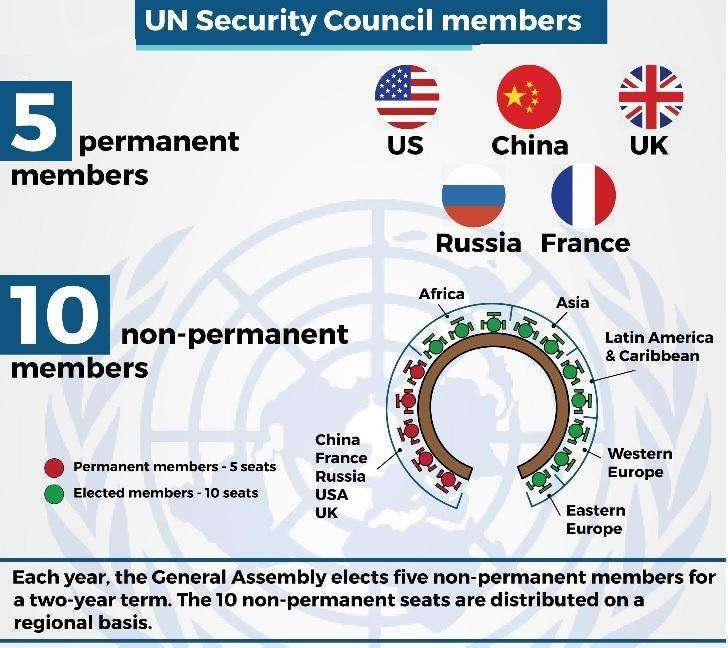
Source: Saarthi IAS
Trump’s Big Speech
Much like most of the diplomats, we’re awaiting the speech by President Donald Trump, and you should be too. With the coordinated announcements of Palestinian recognition and the U.S.’s traditionally unconditional support of Israel, things may get interesting. Trump’s brand of diplomacy, sometimes deliberate and sometimes erratic, nonetheless carries significant weight. With the 80th anniversary of the UN ahead of us, the first meeting having been held just a month after World War II ended in San Francisco, with America as one of the two great powers — Trump is sure to deliver a display of “America First” in his address. While he will undoubtedly thank allies, all eyes will be on his remarks regarding the war in Gaza, where Washington’s balancing act between Israel and the growing international push for Palestinian recognition is being tested.
League of Natio…Sorry We Mean The UN
It’s hard not to continually look back at the League of Nations (the predecessor to the UN) when considering the current situation. At the end of World War I, the League of Nations was founded as an institution designed to bring state actors together under the ideals of international liberalism and collective security. Yet by the 1930s its power and relevance had been reduced to little more than a shell of itself. One could argue it achieved very little of substance in preventing conflict.
The Italian–Ethiopian War of 1935–1936 serves almost as a geopolitical mirror to today’s war in Gaza. At the time, the League of Nations condemned Mussolini’s invasion of Ethiopia and even imposed sanctions, but these measures were weak, inconsistently enforced, and ultimately ineffective. Major powers such as Britain and France were unwilling to jeopardize their own strategic interests, allowing Italy to defy international opinion and occupy Ethiopia. The episode exposed the League’s inability to act decisively in the face of aggression, a failure that many see echoed in the UN’s current paralysis over Gaza.
Just as the League’s inaction eroded its credibility in the 1930s, the UN now faces its own legitimacy crisis. Its founding ideals of peace and cooperation remain, but its capacity to enforce them has been undermined by political divisions, power politics, and the selective application of international law.
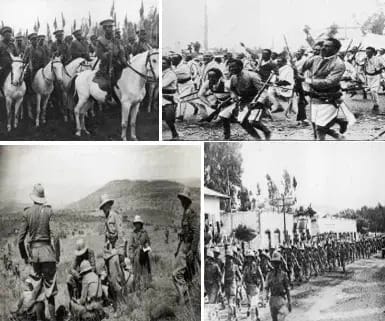
Italian troops, top left, bottom left and right. Top right Ethiopian troops. World History Edu as image source.
Sources:
Sources available upon request, not shown to maintain visual integrity of page.
TWEET OF THE DAY
Ok this isn’t exactly geopolitics related, however that’s going to be an absolutely insane UFC card.
We’ve become the most ridiculous country, and it happened so fast.
— S.V. Dáte (@svdate)
8:01 PM • Sep 20, 2025
TODAY IN HISTORY
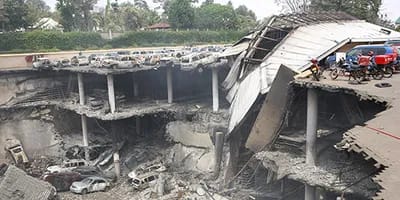
(September 21, 2013): Al-Shabaab militants launched a terrorist attack on the Westgate shopping centre in Nairobi, which ended three days later and left more than 65 people dead, including Ghanian poet and novelist Kofi Awoonor.