- Basedment
- Posts
- Venezuela: A Frontline in Trump’s Monroe Doctrine
Venezuela: A Frontline in Trump’s Monroe Doctrine
Your daily dose of geopolitical updates and strategic analysis. Unbiased, but not unbased.

Editor-in-Chief
August 24, 2025
THE BRIEFING
Here’s what’s happening in geopolitics today.
Today’s briefing takes us across multiple regions, from counter-insurgency operations in Nigeria to high-profile diplomatic visits in Kyiv.
We also look at Turkey’s first lady making a personal appeal to Melania Trump, and Norway stepping up Ukraine’s air defences with a major new package. Meanwhile, tensions in Iran’s southeast continue after security forces clashed with suspected militants.
In our deep dive, we turn to the growing friction between the U.S. and Venezuela: tracing its history, today’s flashpoints, and the roles Russia and Iran are playing behind the scenes.
THE LAST 24 HOURS IN GEOPOLITICS
1. Nigeria’s military says its airstrikes killed 35 Islamic militants in Borno State
The Nigerian Air Force said on Saturday it carried out precision strikes on four militant gathering points near the Cameroon border in Borno state, killing at least 35 suspected Islamic fighters after receiving intelligence of an imminent ground attack on troops. Communications have since been restored with ground forces, who confirmed the area had been secured following the operation. This action marks the latest push in Nigeria’s intensified counter-insurgency campaign against groups like Boko Haram and ISWAP, aimed at halting militant momentum in the northeast.
read more
2. Canadian PM Carney arrives in Kyiv for Ukraine’s Independence Day
Canadian Prime Minister Mark Carney arrived in Kyiv on Sunday (Ukraine’s Independence Day) as announced by President Zelenskyy's chief of staff, Andriy Yermak, who described the visit as a powerful display of solidarity in a critical moment for Ukraine. Carney emphasised that “Canada is stepping up our support and our efforts towards a just and lasting peace,” reaffirming firm diplomatic and moral backing for Ukraine amid ongoing conflict.
read more
3. Turkish first lady urges Melania Trump to speak out for Gaza’s children
Turkish First Lady Emine Erdoğan sent a heartfelt letter on Friday to U.S. First Lady Melania Trump, urging her to reach out to Israeli Prime Minister Netanyahu and highlight the dire situation facing children in Gaza, drawing inspiration from Melania’s earlier letter to President Putin advocating for Ukrainian children. Emine emphasised that the global awakening to Palestine and Melania’s earlier compassion for Ukrainian youth placed a “historic responsibility” on her to extend the same support to Gaza’s most vulnerable.
read more
4. Norway to provide Ukraine with air defence systems worth about $700M
Norway is allocating approximately USD 686M million to provide advanced air defence systems to Ukraine, including two Patriot missile batteries, radars from Hensoldt, and systems from Kongsberg, in coordination with Germany. This significant contribution underscores Norway’s commitment to strengthening Ukraine’s ability to defend against aerial threats and protect both military and civilian infrastructure. Paired with Germany’s deployment of Patriot systems, the move represents a deepening of European military support for Ukraine.
read more
5. Iranian forces kill six militants linked to Israel, reports say
Iranian security forces engaged militants in southeastern Sistan-Balochistan on Saturday, killing six and arresting two more in a clash that followed the killing of five police officers the day before. State media IRNA said the group was linked to Israel and possibly trained by Mossad, though there has been no immediate response from Israeli officials.
read more
DAILY DEEP DIVE
MONROE OUT, TRUMPROE DOCTRINE IN.
Summary of Recent Events
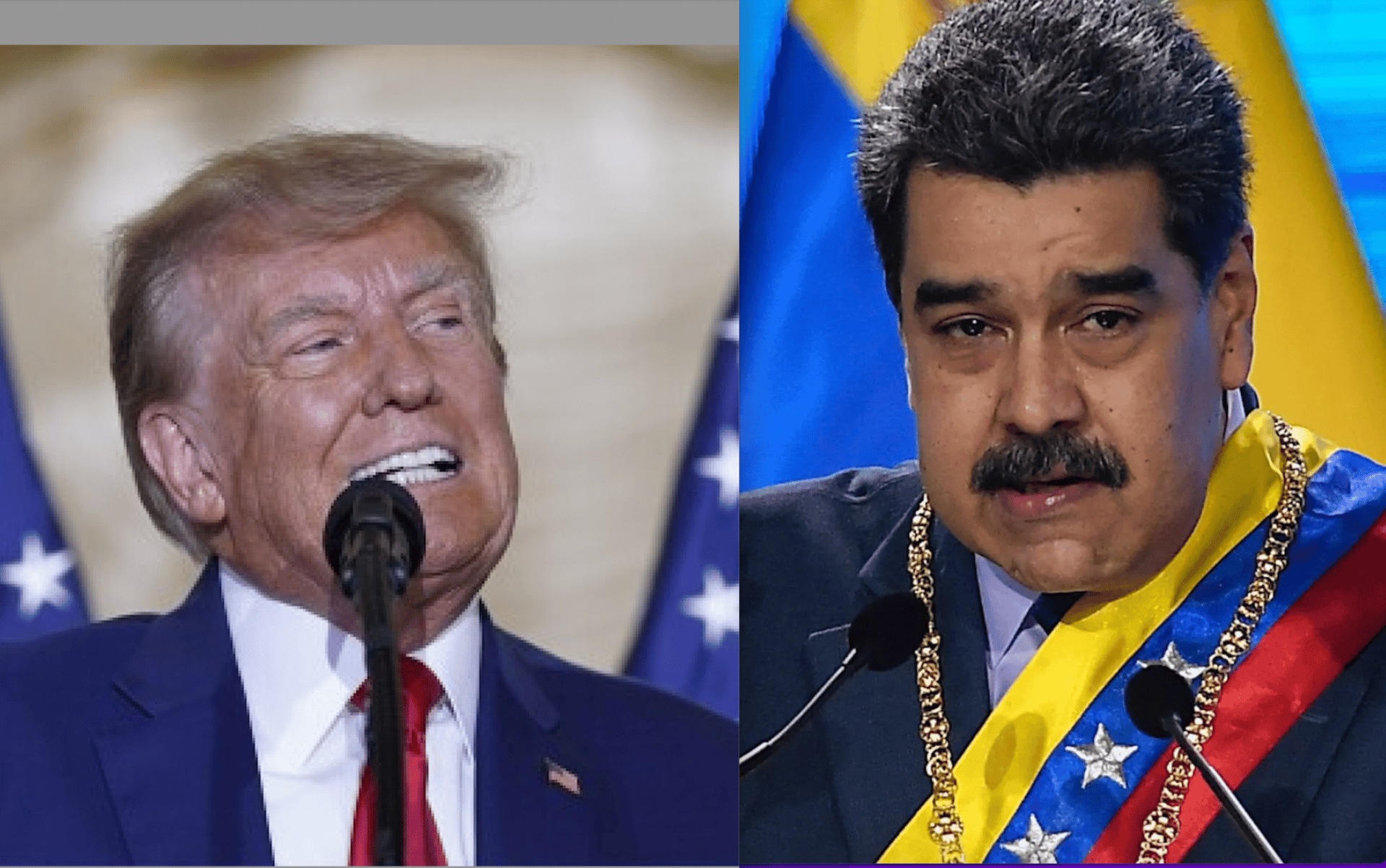
Washington has deployed three guided-missile destroyers (the USS Gravely, USS Jason Dunham, and USS Sampson) along with about 4,000 sailors and Marines to the southern Caribbean under an “anti-drug” mission. At the same time, the Trump administration doubled the bounty for Nicolás Maduro’s capture to $50 million, accusing him of leading the Cartel de los Soles, a cocaine smuggling network (though no public evidence has been provided).
Maduro responded by denouncing what he called U.S. “extravagant, bizarre and outlandish threats.” He vowed to mobilise more than 4.5 million militia members, promising they would be “prepared, activated and armed” with rifles and missiles to defend Venezuelan sovereignty. Interior Minister Diosdado Cabello added that militias and security forces are already deployed across Venezuela’s land and waters.
Not all developments are negative. Venezuela recently released 10 detained U.S. citizens as part of a deal that also saw more than 250 Venezuelan migrants returned home from El Salvador. The swap followed months of negotiations and eased some tensions after the migrants were controversially deported under the Alien Enemies Act and held in harsh conditions at El Salvador’s CECOT prison.
The Modern Monroe Doctrine
Trump’s approach to Latin America can be described as hostile and unilateral. Domestically, he has tied the region to U.S. problems such as illegal immigration and the fentanyl epidemic. In his rhetoric, drug cartels and migrant flows from Mexico and beyond are painted as major sources of insecurity, shaping policies that now extend directly to Venezuela.
Diplomatically, Trump has clashed with multiple neighbours. His administration has imposed tariffs on Mexico and Canada, been accused of meddling in Brazil after backing ex-president Bolsonaro, pressured Panama to withdraw from China’s Belt and Road Initiative, and is now escalating against Venezuela.
This reflects a broader worldview in which the Americas are not treated as partners, but as part of the U.S. sphere of influence. The roots of this mindset go back to the Monroe Doctrine of 1823, which warned European powers not to interfere in the Western Hemisphere. Over time, the doctrine evolved into a justification for repeated U.S. intervention in Latin America, becoming a cornerstone of American foreign policy throughout the 19th and 20th centuries.
Bonus note: Not many people know of the Monroe Doctrine, often assuming U.S interventionism is a modern doctrine and that the U.S used to be above medieval European bickering over spheres of influence. Noting that the U.S was famously isolationist, and it was but on affairs NOT in the Americas.
Russian and Iranian Involvement
Washington is not the only power seeking influence in Venezuela. Moscow and Tehran have also deepened ties with Caracas, both seeing Maduro as a partner against U.S. “imperialism.”
Russia has long been Venezuela’s closest ally in South America. Backed by historical links through socialism and anti-U.S. alignment, Moscow has supported Maduro with arms sales, oil investments, loans, military advisors, and air-defence systems. The mercenary group Wagner has also acted as security detail for Maduro. This gives Russia low-cost leverage to irritate Washington, but it also carries risks: if Maduro falls, Russian assets could be lost and its credibility weakened.
Iran has built a similar relationship out of shared isolation. The two countries cooperate on oil swaps, refinery repairs, and are moving towards a free trade agreement. Their partnership has also expanded into the military sphere. In recent years, Tehran helped establish a drone production facility near Maracay, where Iranian-designed Shahed-131 loitering munitions (rebranded locally as the Zamora V-1) are being assembled. These drones, already battle-tested in Ukraine and the Middle East, give Venezuela a cheap but powerful asymmetric strike capability; able to threaten U.S. bases in the Caribbean, Colombian targets, and potentially even reach the U.S. mainland under the right conditions.
Together, Russia and Iran see their alliances with Caracas as both an economic lifeline and a strategic counterweight to U.S. dominance in Latin America.
Sources:
Sources available upon request, included separately to not disrupt the style of the page.
TWEET OF THE DAY
It feels like X has become 99% Gavin Newsom memes and I’m completely here for it…
TODAY IN HISTORY
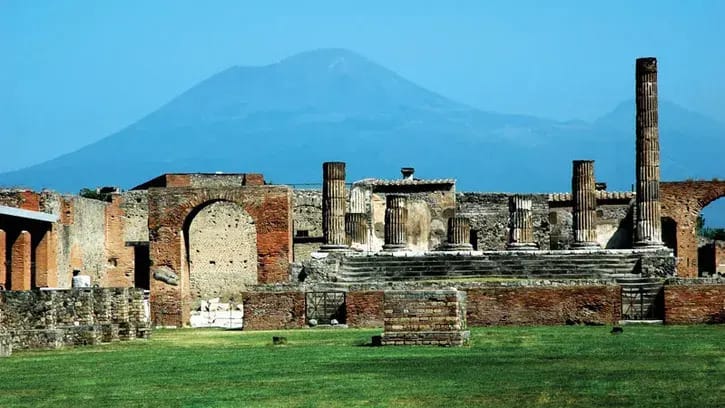
(August 24, 79BC): Eruption of Mount Vesuvius
On this day in 79BC, Mount Vesuvius erupted in southern Italy, burying the Roman cities of Pompeii and Herculaneum under ash and pumice. The disaster preserved buildings, objects, and even people in remarkable detail, and when excavations began in the mid-18th century, they helped lay the foundations for modern archaeology.