- Basedment
- Posts
- VIETNAM: GEOPOLITICAL TIGHTROPE
VIETNAM: GEOPOLITICAL TIGHTROPE
Your daily dose of geopolitical updates and strategic analysis. Unbiased, but not unbased.

Editor-in-Chief
August 27, 2025
THE BRIEFING
Here’s what’s happening in geopolitics today.
Today’s briefing takes us from Canberra’s sharp diplomatic move against Tehran to Beijing’s high-stakes hosting of world leaders.
Europe is also turning up the pressure on Iran, while Lebanon works on a delicate plan to address Hezbollah’s arms. Meanwhile, Germany is holding back on Palestinian state recognition even as international momentum builds.
In our deep dive, we explore the balancing act Vietnam has played between China and the U.S, but how long can Hanoi maintain it?
THE LAST 24 HOURS IN GEOPOLITICS
1. Australia expels Iranian ambassador over antisemitic arson attacks
Australia has taken the rare step of expelling Iran’s ambassador and three diplomats after intelligence linked Tehran to orchestrating antisemitic arson attacks in both Sydney and Melbourne. Prime Minister Anthony Albanese called the attacks “extraordinary and dangerous acts of aggression” aimed at undermining social cohesion, while the government also announced plans to designate the IRGC as a terrorist organisation.
read more
2. Xi to host landmark SCO summit with Putin, Modi in attendance
Chinese President Xi Jinping is set to host over 20 world leaders, including Russian President Vladimir Putin and Indian Prime Minister Narendra Modi, at the Shanghai Cooperation Organisation (SCO) summit in Tianjin from August 31 to September 1, signalling a major push to build Global South solidarity. This event marks Modi’s first visit to China in over seven years and follows rising interest in trilateral talks between India, China, and Russia on the summit’s sidelines. While the SCO may have limited track records on concrete outcomes, it's being leveraged as a powerful platform to project a post-American world order.
read more
3. Iran, European powers meet in Geneva as threat of sanctions looms large
Senior officials from Iran and Europe’s “E3” are meeting in Geneva today to pressure Iran into reviving nuclear inspections and diplomacy or face the reimposition of sanctions lifted under the 2015 deal. The E3 has issued an ultimatum, warning that unless Iran makes measurable progress by the end of August, they may invoke the UN’s “snapback” mechanism to automatically reinstate sanctions. While Tehran insists it has no plans for nuclear weapons, its uranium enrichment and refusal to allow IAEA access after recent strikes have heightened regional tensions and raised serious doubts among Western nations.
read more
4. Lebanon will come up with a plan on August 31 to convince Hezbollah to disarm
Lebanon has committed to presenting a plan by August 31 aimed at encouraging Hezbollah to disarm through non-military means, according to U.S. Special Envoy Thomas Barrack. Israel, in response, will offer its own counterproposal once it reviews Beirut’s strategy, even signaling willingness to reduce its military presence in southern Lebanon if the Lebanese Armed Forces move forward with disarmament steps. Hezbollah remains defiant, with its leaders warning of dire consequences if the government presses ahead, highlighting the delicate balance between diplomacy and domestic stability.
read more
5. Germany refuses to recognise Palestinian State amid rising international support
UAt a joint press conference with Canada’s Prime Minister, German Chancellor Friedrich Merz made it clear that Germany will not join Western allies in recognizing a Palestinian state during next month’s UN General Assembly. Merz emphasized that Berlin believes the necessary conditions for such recognition have yet to be met, setting Germany apart from partners like Canada, France, and the UK
read more
DAILY DEEP DIVE
THE VIETNAMESE GEOPOLITICAL TIGHTROPE
Geopolitical Context
A growing storm clouds the geopolitical pathway of Vietnam: the ever-concerning clash of the USA and China. Vietnam has managed to engage with both superpowers, but this balancing act is becoming more difficult with every passing year. The Southeast Asian nation is also a member of ASEAN, which offers it a unique role, positioned between Chinese influence and the smaller economic union of ASEAN. Hanoi’s central government has also made clear its intent to strengthen ties with the United States through both political and financial means.
Vietnam-China Relations
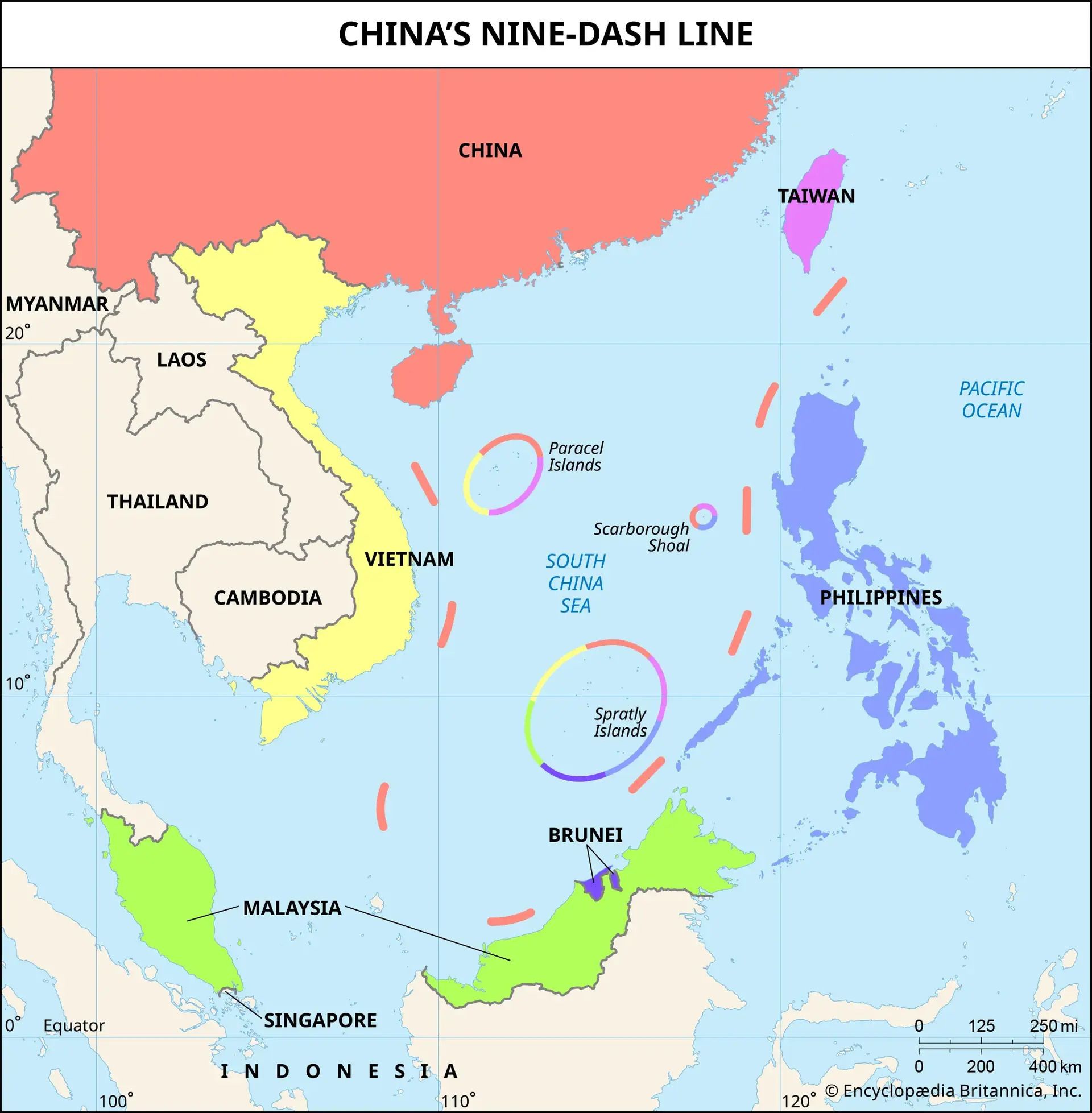
China was the first to recognise the Socialist Republic of Vietnam in 1950. For decades, shared ideology kept the relationship intact, but in recent years deep cracks have formed. In the 1980s relations broke down completely, with open clashes along land and sea borders. By the 1990s, ties were normalised once again, but the same territorial disputes that plagued the past have re-emerged, with the relationship being strained in modern times. The South China Sea remains the central driver of tension, and it continues to shape Vietnamese foreign policy.
China has not hesitated to pressure Hanoi. In the wake of Russia’s invasion of Ukraine, Beijing warned Vietnam against cooperating too closely with the United States, framing it as a betrayal of regional solidarity. Yet the relationship with China is not purely geopolitical; it is also deeply economic.
The Belt and Road Initiative (BRI), launched by Xi Jinping in 2013, has become one of the most significant tools binding Vietnam to China. BRI funding has improved large-scale infrastructure projects, including seaports, and has created new economic and trade cooperation zones. These investments have helped Vietnamese businesses access wider markets, particularly China’s. But the BRI is also a weapon of soft power. It deepens China’s influence while aiming to divide ASEAN, keeping countries like Vietnam closer to Beijing and making any strategic drift toward the US more costly.
Vietnam–US Relations
The relationship with the United States is just as complex. In 1991, the Bush administration offered Vietnam a “road map” to normalisation. This required Vietnam to return American POWs, allow refugees to leave, and ease restrictions. By 1994, under Clinton, the embargo was lifted, and cooperation began to expand.
From there, the trajectory accelerated. In 1999, Washington and Hanoi negotiated one of the most complex trade deals in modern US history. By 2001, an extensive trade agreement was signed, and in 2007 Vietnam joined the World Trade Organisation. Vietnam has taken a proactive approach to cultivating US ties -its leadership has repeatedly sought out opportunities to secure high-level engagement, eager to embed itself in Washington’s strategic and economic orbit.
Today, the numbers speak for themselves. In 2022, trade in goods between the two countries surpassed $138 billion, making Vietnam America’s 10th largest trading partner. The US is Vietnam’s largest export destination, far outstripping other markets. But the relationship has moved beyond economics. Strategic cooperation has deepened: Vietnam signed a $15.5 billion energy partnership with the US, USAID has funded hundreds of millions of dollars in solar and wind projects, and American public health initiatives have provided crucial support, from HIV/AIDS assistance to 40 million COVID-19 vaccine doses. On top of that, 30,000 Vietnamese students now study in the US the fifth largest foreign student group (2023 statistics).
These initiatives mirror China’s BRI: they are soft power investments designed to lock Vietnam into Washington’s sphere. In 2023 alone, both President Biden and Secretary of State Blinken visited Vietnam, underlining its importance in America’s Indo-Pacific strategy. Biden announced a comprehensive strategic partnership that would increase military-to-military cooperation, pushing the relationship firmly into the security domain. The question is clear: what will Hanoi have to give up in return?
Challenges for Vietnam
Vietnam’s greatest challenge lies in how long it can maintain this balancing act. Officially, its foreign policy remains “multidirectional,” but reality is making neutrality increasingly difficult.
Beijing has already tried to derail growing ties between Hanoi and Washington. As tensions escalate across the South China Sea, Chinese pressure will only intensify. At the same time, Vietnam knows it cannot afford to rely too heavily on the US. America’s long-term reliability as a security guarantor is questioned even by its allies, and Vietnam is directly bordered by the fastest-rising superpower in the world. Geography makes China impossible to ignore.
Domestically, Vietnam’s economy is thriving but corruption also remains a persistent obstacle, one that risks choking the very economic growth Hanoi needs to preserve its strategic autonomy.
Recent Developments in 2025
By 2025, the strain of balancing between Washington and Beijing has only grown more visible. At the BRICS Summit in Brazil, Prime Minister Pham Minh Chinh met with Chinese Premier Li Qiang and pledged to deepen trade and investment ties, including a new cross-border railway project starting in December. This reaffirmed the importance of China to Vietnam’s economic future.
At the same time, Hanoi scrambled to strike a deal with the Trump administration after the US imposed new tariffs: 20% on all Vietnamese exports and 40% on goods deemed “trans-shipped”, largely targeting Chinese components routed through Vietnam. To secure the agreement, Vietnam promised to buy more American goods, cut tariffs on US imports, and even signalled potential interest in acquiring American fighter jets.
Hanoi’s leadership was left with little options to manoeuvre. Exports to the US are critical, and with a Party Congress looming, the government needed to protect economic stability at all costs. But this balancing act only deepens the risk. China remains vital for supply chains and investment, and Beijing will view Vietnam’s concessions to Washington with suspicion. Meanwhile, Europe has begun pressing its own agenda, criticising Vietnam over coal reliance, clean energy barriers, and migration issues.
Sources:
Sources available upon request, included separately to not disrupt the style of the page.
TWEET OF THE DAY
“He ought to spend more time in the gym” LOL
🚨 LMFAO! PRESIDENT TRUMP on Illinois Governor JB PRITZKER: "He ought to spend more time in the gym, actually."
😭🤣
— Eric Daugherty (@EricLDaugh)
3:03 PM • Aug 25, 2025
TODAY IN HISTORY
(August 26, 1429): Joan of Arc's arrival in the outskirts of Paris
In preparation for an attack on Paris, part of Charles VII's campaign to drive the English from French soil, Joan of Arc and her soldiers reached the city's outskirts on this day in 1429, but the assault ultimately failed.