- Basedment
- Posts
- What The UAE-India Partnership Means For The Wider Region
What The UAE-India Partnership Means For The Wider Region
As the UAE faces set backs in the MENA region and India looks to diversify it's geopolitical foothold, we look at their new partnership.

Editor-in-Chief
January 21, 2026
THE BRIEFING
Here’s what’s happening in geopolitics today.
From India and the UAE locking in a deeper defence partnership to Trump once again turning Greenland into a geopolitical pressure point, today’s headlines span shifting alliances and sharp diplomacy.
We’re also tracking ASEAN distancing itself from Myanmar’s junta-run election, a rare presidential resignation in Bulgaria, and Moldova taking another decisive step away from Moscow’s orbit.
In today’s deep dive, we’re examining the new UAE-India strategic partnership, what’s behind it and what it means for the region.
A WORD FROM OUR SPONSOR
Here’s an un-boring way to invest that billionaires have quietly leveraged for decades

If you have enough money that you think about buckets for your capital…
Ever invest in something you know will have low returns—just for the sake of diversifying?
CDs… Bonds… REITs… :(
Sure, these “boring” investments have some merits. But you probably overlooked one historically exclusive asset class:
It’s been famously leveraged by billionaires like Bezos and Gates, but just never been widely accessible until now.
It outpaced the S&P 500 (!) overall WITH low correlation to stocks, 1995 to 2025.*
It’s not private equity or real estate. Surprisingly, it’s postwar and contemporary art.
And since 2019, over 70,000 people have started investing in SHARES of artworks featuring legends like Banksy, Basquiat, and Picasso through a platform called Masterworks.
23 exits to date
$1,245,000,000+ invested
Annualized net returns like 17.6%, 17.8%, and 21.5%
My subscribers can SKIP their waitlist and invest in blue-chip art.
Investing involves risk. Past performance not indicative of future returns. Reg A disclosures at masterworks.com/cd
THE LAST 24 HOURS IN GEOPOLITICS
1. India-UAE sign strategic defence partnership
India and the United Arab Emirates have taken a major step toward formalising a Strategic Defence Partnership, signalling a deepening of security cooperation alongside expanding trade and energy ties. During a visit by UAE President Sheikh Mohamed bin Zayed Al Nahyan to New Delhi, leaders from both countries signed a Letter of Intent to establish a defence framework that will strengthen collaboration on military training, intelligence sharing, technology, interoperability, and defence innovation. The move builds on decades of growing bilateral relations and comes as part of broader agreements including a $3 billion LNG supply deal and a pledge to double bilateral trade to $200 billion by 2032.
read more
2. Donald Trump links Greenland takeover threat to Nobel Peace Prize snub
Trump publicly linked his drive to assert control over Greenland to his frustration at not receiving the Nobel Peace Prize, telling Norway’s Prime Minister he “no longer feels an obligation to think purely of peace” after the snub. In a message made public by Norwegian officials, Trump reiterated that he believes Greenland is vital to U.S. security and should be under American control, a stance that has heightened tensions with European allies. The remarks come as Trump has threatened tariffs on several NATO and EU countries that oppose U.S. efforts on Greenland, prompting European leaders to consider retaliatory trade measures.
read more
3. ASEAN won’t certify Myanmar election or send observers
The Association of Southeast Asian Nations (ASEAN) announced it will not send official observers to Myanmar’s ongoing three-stage election and therefore will not endorse or certify the poll, Malaysia’s foreign minister said on Tuesday. The military-run election, initiated by the junta that seized power in the 2021 coup, has drawn criticism from the United Nations, Western governments and rights groups as a bid to legitimise military rule through political proxies. ASEAN rejected Myanmar’s request to deploy election observers during its leaders’ summit last year, though some individual member states may choose to observe independently.
read more
4. Bulgaria’s President Rumen Radev says he will resign ahead of snap election
Bulgarian President Rumen Radev announced he will resign from office ahead of upcoming snap parliamentary elections, saying he intends to formally submit his resignation to the Constitutional Court to make himself eligible to run. This move makes him the first head of state to step down in Bulgaria’s post-communist history and comes amid ongoing political instability, with the country headed for its eighth national vote in five years after repeated failures to form a stable government. Under the constitution, Vice President Iliana Yotova will serve as acting president once the resignation is approved, and Radev’s decision has fuelled speculation that he may launch a new political force to contest the elections.
read more
5. Moldova proceeds with withdrawal from Russia-led CIS group
Moldova has formally initiated the legal process to withdraw from the Russia-led Commonwealth of Independent States (CIS) by beginning the denunciation of three core agreements that underpin its membership, Foreign Minister Mihai Popșoi said. Though Chisinau had already suspended its active participation in CIS activities since 2023, completing this denunciation and submitting the documents to parliament will mean Moldova is legally no longer a member once approved, likely by mid-February.
read more
DAILY DEEP DIVE
The UAE and India Strategic Partnership
Context
In recent weeks the ten-year long UAE regional expansion through proxies, soft power and such forth has faced significant setbacks. First, its Yemeni proxy collapsed in a matter of less than a month after it’s over confident campaign to eliminate the Saudi backed forces. Now, it’s supply lines to the RSF have been increasingly complicated as several countries look to close their airspace to the UAE delivery. This strategic partnership looks to secure it’s asian flank and counter the Saudi-Pakistan relationship.
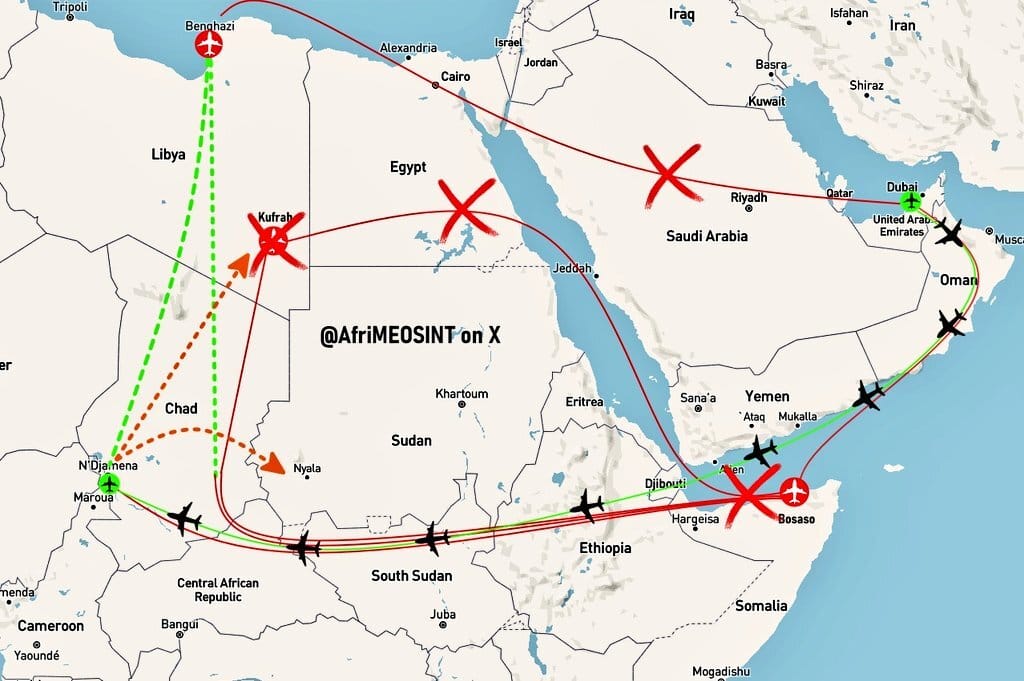
Map showing routes of UAE supply lines to the RSF (AfriMEOSINT source)
The Egyptian-Saudi Blockade of The UAE
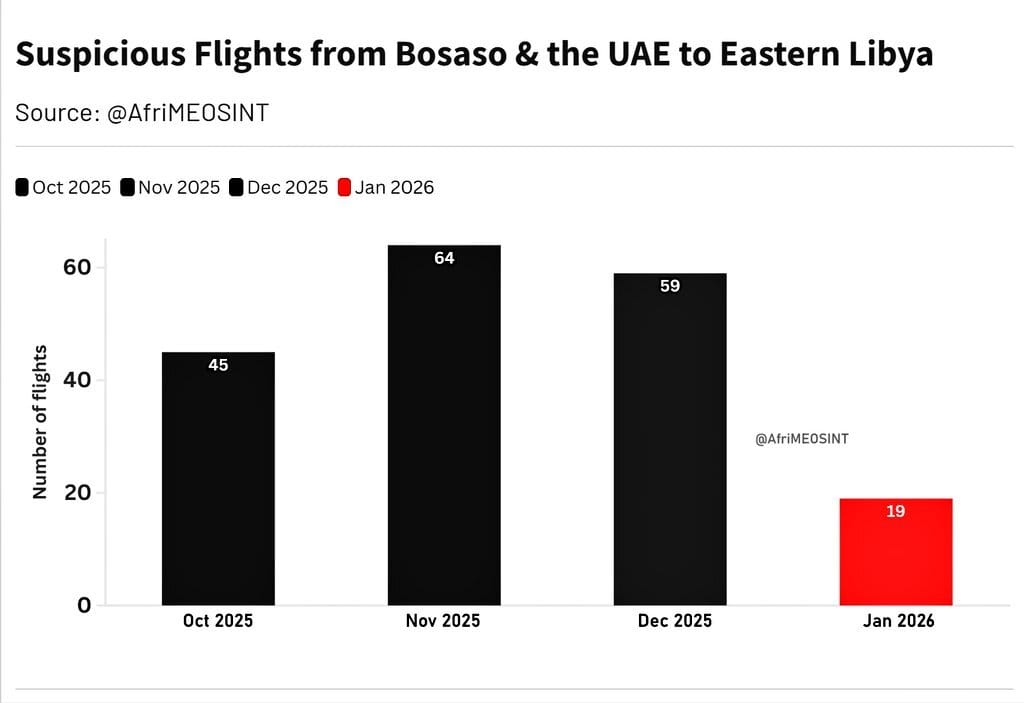
Saudi Arabia and Egypt have moved to block their airspace to UAE-linked cargo flights bound for eastern Libya, significantly constraining regional supply routes. Somalia has gone further, cancelling existing security agreements with the United Arab Emirates and imposing a full ban on Emirati cargo flights. These coordinated measures form part of a broader effort to curb UAE influence across the Red Sea and Horn of Africa theatres. Compounding the disruption, Kufrah Airport has been closed under the pretext of repairs, removing a key logistical hub. As a result, N'Djamena has reportedly emerged as the sole remaining aerial lifeline for RSF-linked logistics. Together, these steps mark a sharp escalation in regional pressure on UAE-aligned networks.
The India-UAE Partnership
The latest India–UAE strategic partnership delivers clear, asymmetric benefits to both sides while reinforcing shared long-term interests. For the UAE, the agreement deepens defence cooperation with a major Indo-Pacific power, diversifying its security relationships beyond traditional Western partners. It strengthens Abu Dhabi’s access to India’s expanding defence manufacturing base through joint production, training, and maintenance, while reinforcing the UAE’s ambition to position itself as a strategic bridge linking South Asia, West Asia, and Africa. Energy remains central, with long-term LNG arrangements anchoring the relationship and providing predictable demand.
For India, the partnership enhances energy security at a time of global volatility, locks in Gulf investment, and expands defence cooperation without formal alliance obligations. It gives New Delhi greater strategic depth in West Asia, supports its multipolar foreign policy, and strengthens trade and logistics access through the Gulf. Collectively, the partnership reduces over-reliance on any single partner, improves resilience to geopolitical shocks, and aligns economic, energy, and security interests without binding commitments.
Essentially, this partnership is about diversifying geopolitical footholds. The UAE is seeking stronger partners in the Asia-Pacific at a time when its MENA ambitions are facing growing friction and limits. India, meanwhile, is looking to balance Pakistan’s long-standing strategic relationship with Saudi Arabia by deepening ties with another major Gulf power. In other words, this is less about any single agreement and more about expanding each side’s diplomatic and strategic toolkit.
Sources
News/Journal sources available upon request, not shown to maintain visual integrity of page.
TODAY IN HISTORY
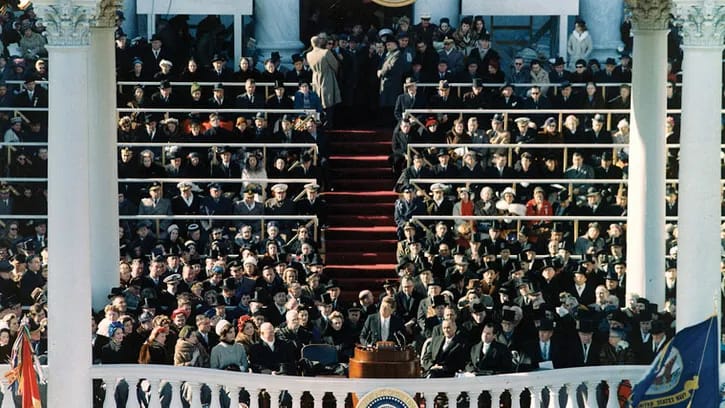
(January 20, 1961): Inaugural address delivered by John F. Kennedy
On this day in 1961, U.S. Pres. John F. Kennedy delivered his inaugural address in front of nearly 1 million people. He was the youngest person to have been elected president, and his speech garnered praise from across the world. His address was also marked by the famous phrase, “Ask not what your country can do for you—ask what you can do for your country.”