- Basedment
- Posts
- Why Russian Advances Have Slowed During Winter
Why Russian Advances Have Slowed During Winter
Today we explore the reasons for the slowed advances by Russian units, some obvious some not, from logistics to foliage.

Editor-in-Chief
January 28, 2026
THE BRIEFING
Here’s what’s happening in geopolitics today.
From Beijing to Paris, today’s headlines take us through high-stakes diplomacy, courtroom reckonings and lingering conflicts.
We’re tracking a UK charm offensive in China, Washington’s defence of its Venezuela playbook, a landmark French conviction, Israel marking the final chapter of its hostage recovery, and fresh legal fallout at the top of South Korean politics.
In Today’s deep dive, we turn to Ukraine as we explore the reasons for the slowed advances by Russian units, some obvious some not, from logistics to foliage.
THE LAST 24 HOURS IN GEOPOLITICS
1. Keir Starmer arrives in Beijing for talks with China’s President Xi
Starmer arrived in Beijing on Wednesday for a three-day visit where he is scheduled to hold talks with Chinese President Xi Jinping and other senior leaders to reset and strengthen bilateral relations. The visit, which includes a delegation of more than 50 business leaders, aims to broaden cooperation on trade and investment while also navigating sensitive issues such as national security concerns and human rights. Starmer has emphasised that the U.K. will engage pragmatically with China without having to choose between Beijing and its traditional alliance with the United States, reflecting efforts to balance economic opportunity with geopolitical caution.
read more
2. Rubio scheduled to appear before Senate to outline Trump’s Venezuela policy
Marco Rubio is scheduled to appear before the Senate Foreign Relations Committee on Wednesday to outline and defend the Trump administration’s policy toward Venezuela, including its controversial military actions and diplomatic strategy following the removal of Nicolás Maduro. The hearing comes amid heightened scrutiny from both Republicans and Democrats over the legality, transparency and future direction of U.S. involvement in Venezuela. Rubio is expected to tell lawmakers that while the United States is not at war with Venezuela, it remains prepared to use force again if the country’s interim leadership fails to align with U.S. goals, and to emphasise that the Maduro operation was framed as a law-enforcement action rather than an occupation.
read more
3. French former senator found guilty of drugging MP with intent to sexually assault her
A Paris court has found former French senator Joël Guerriau guilty of drugging National Assembly MP Sandrine Josso with MDMA in November 2023 with the intent to sexually assault her, marking a high-profile conviction in a case that has drawn national attention to drug-facilitated sexual violence. Prosecutors and the judges rejected Guerriau’s claim that the drugging was accidental, citing the high dose of MDMA in the MP’s drink and evidence including his online searches, and sentenced him to four years in prison with 18 months to be served immediately; he also faces a ban on public office and has appealed the verdict.
read more
4. Israel will hold funeral for last hostage recovered from Gaza
Israel is holding a funeral for Ran Gvili, the last Israeli hostage recovered from Gaza, marking the end of efforts to account for all captives taken that day. Gvili’s remains, found and identified after extensive searches in Gaza under a U.S.-brokered ceasefire plan, will be buried in his hometown of Meitar with senior Israeli leaders expected to speak at the ceremony. The funeral comes as Israel moves to complete the first phase of the peace plan and could pave the way for reopening the Rafah border crossing with Egypt, a key humanitarian lifeline for Gaza.
read more
5. South Korea’s former first lady sentenced to jail term in bribery case
A Seoul court has sentenced former South Korean first lady Kim Keon-hee to 20 months in prison after finding her guilty of accepting bribes from officials of the Unification Church in exchange for political favours. The Seoul Central District Court cleared her of other charges, including stock manipulation and violating political funding laws due to insufficient evidence, but upheld the bribery conviction based on luxury gifts such as designer handbags and a diamond necklace. Kim’s sentence comes as part of a broader legal reckoning for the once-powerful former presidential couple and both sides may appeal the verdict.
read more
DAILY DEEP DIVE
Father Winter Never Fails To Arrive - Especially In Ukraine
Winter Hits
Naturally, when winter hits the east, things become quite complicated. Snow and ice litter all supply routes, major and insignificant alike. This means a far higher effort is required simply to keep supply chains open and operating. On top of that, the risk of mechanical failure increases sharply.
In the trenches, things aren’t much better — especially the closer you are to the frontline. Daily-use items freeze, and digging trenches becomes almost impossible without heavy equipment. If you want proof, just ask your neighbourhood Napoleonic or German infantry — they know all about it. The Russians generally have a much better rotation system in place than the Ukrainians, largely due to their substantial manpower advantage. Some Ukrainian units cannot be rotated at all, simply because there is no one to rotate them with.
And this has been a particularly brutal winter. Over December, an Arctic cold blast drove temperatures 12–15°C below normal across much of Europe, including Eastern Europe and Ukraine. A disrupted Polar Vortex, weakened by stratospheric warming events, has allowed deep Arctic air to spill far south, sustaining prolonged cold and heavy snowfall. Moisture from the Mediterranean interacting with this frigid air has produced intense winter storms and so-called “snow bombs,” bringing blizzards and deep snow across the Balkans and Eastern Europe. These conditions have compounded hardships along the Ukraine–Russia frontline with extreme cold, snow, and severely reduced mobility.
Foliage Has Disappeared
The modern battlefield increasingly revolves around staying hidden from drones for as long as possible. The most effective way to do this while advancing was to move through the vast tree lines separating villages and farmland. The reason I say ‘was’ is because, since autumn, most of the dense foliage previously used (primarily by Russian units) has died off. This has made it far easier to detect and target the one- to two-man assault groups that have dominated the battlefield by probing for gaps in enemy lines.
Less Drone Action
The loss of foliage is also why we’ve seen a return to heavier vehicle use by both Ukraine and Russia. With infantry increasingly pinned down, the alternative has been stockpiled vehicles — many of which likely spent months collecting dust and cobwebs. You might ask: why use vehicles when drones dominate the battlefield? The answer is weather. Wind, rain, and persistent fog from November through January have significantly hampered drone effectiveness.
Final Comments
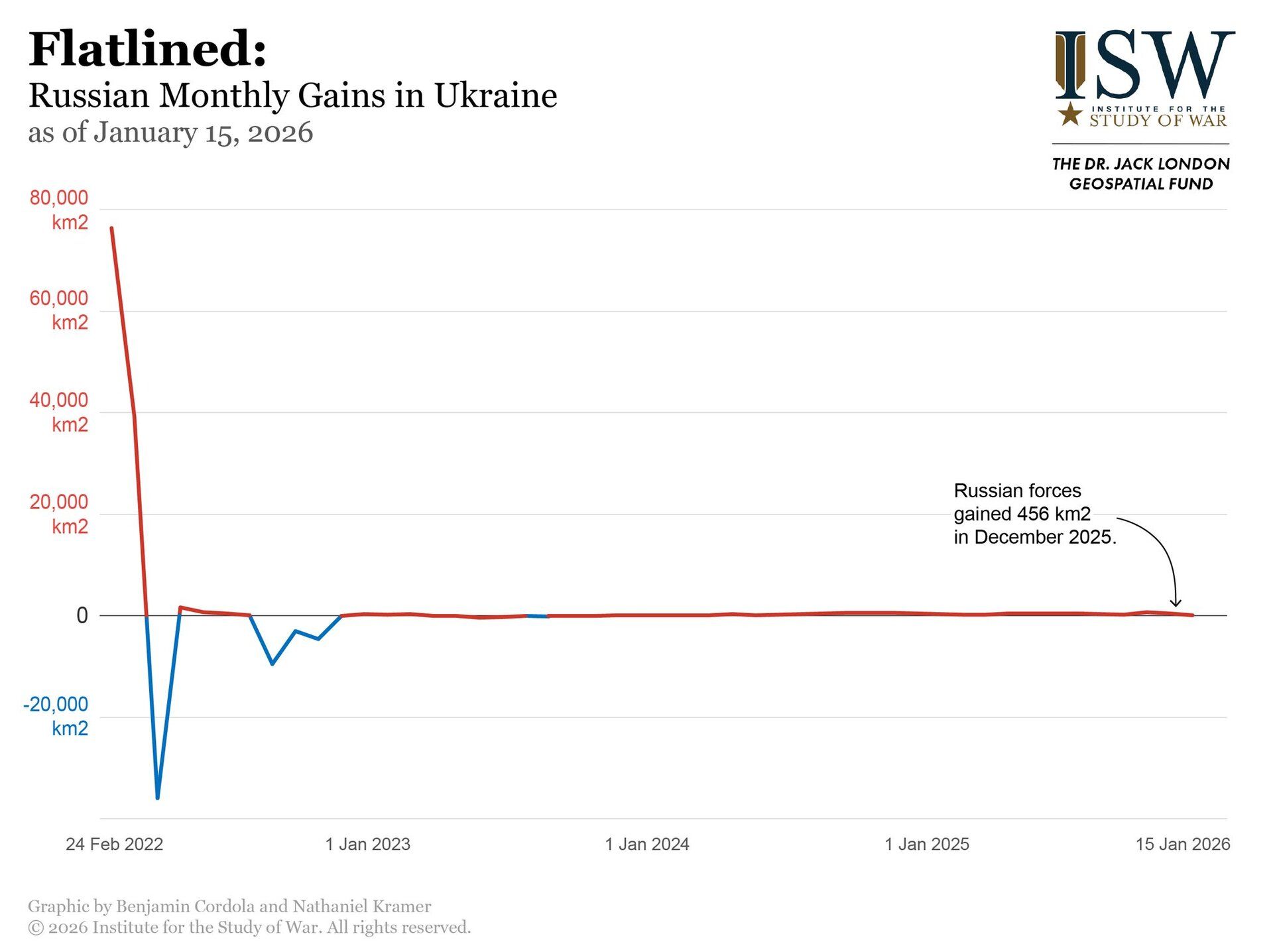
This stall in advances fits the trend of Russian attacks slowing in winter. For the reasons we listed above, the Russian army uses these winter months to prepare for the spring and summer offensives. So what we’re seeing here is largely an operational pause.
All in all, overall effectiveness is down across the board. This doesn’t mean combat has stopped. Rather than large strategic manoeuvres — even by the slow standards of this war — we are seeing more localised, tactical engagements across key sectors. Fighting remains consistent around frontline towns such as Orikhiv, Kostiantynivka, Rodynske, and Kupiansk, with a heavy emphasis on infantry combat.
It’s also why both sides are primarily prioritising their air campaign on the energy grid in an attempt to lower morale and support for the war effort on the home front.
Sources
News/Journal sources available upon request, not shown to maintain visual integrity of page.
TODAY IN HISTORY
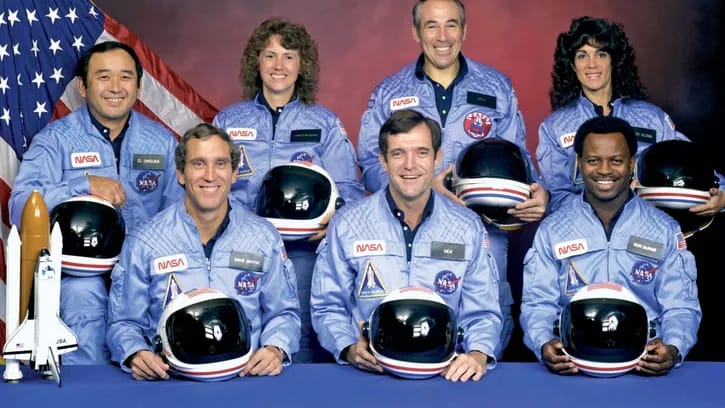
(January 28, 1986): Challenger space shuttle catastrophically explodes
On this day in 1986, the U.S. space shuttle Challenger exploded 73 seconds after liftoff from Florida, killing all seven aboard, including high school teacher Christa McAuliffe, who had been chosen as the first American civilian to travel in space. After the disaster, NASA overhauled its space exploration program and added extra safeguards to its shuttles' rocket boosters.