- Basedment
- Posts
- WSJ Bombshell: Witkoff In Crosshairs Again
WSJ Bombshell: Witkoff In Crosshairs Again
A WSJ article accuses Witkoff, Kushner and Russian officials of focussing discussions on economic interests over Ukraine's interest.

Editor-in-Chief
December 01, 2025
THE BRIEFING
Here’s what’s happening in geopolitics today.
From Asia to Central America, today’s briefing spans missile shields, marathon diplomacy, courtroom drama, papal appeals, and a tight election race.
We’re tracking Taiwan’s push to harden its defences against China, cautious progress in U.S.–Ukraine peace talks, a UK MP sentenced abroad, Pope Leo pressing Lebanon’s leaders for unity, and early results putting conservatives ahead in Honduras.
For the deep dive we’re taking a look at today’s U.S.-Ukraine meeting in Miami and all the background information you might be missing.
THE LAST 24 HOURS IN GEOPOLITICS
1. Taiwan reportedly plans first weapons purchases for T-Dome to counter China
Taiwan is reportedly preparing to acquire the first weapons for its new T‑Dome air-defence system, a project unveiled in October 2025 aimed at countering growing pressure from People’s Republic of China. The procurement would see Taiwan Ministry of National Defense coordinate with U.S. counterparts, potentially involving systems like the Northrop Grumman Corporation’s Integrated Battle Command System (IBCS), to link local and foreign weapons under T-Dome’s layered defence architecture. The move reflects Taipei’s broader defence push this year, underpinned by a newly approved special budget of about US $40 billion.
read more
2. Rubio says US-Ukraine talks on ending war ‘productive’ but ‘complicated’
Marco Rubio said talks between the U.S. and Ukraine on ending the war with Russia were “productive,” even as he stressed the negotiations remain “difficult” and that “much work” lies ahead. Ukrainian officials echoed that sentiment, calling the meeting “useful” and noting progress toward a peace framework designed to preserve Ukraine’s sovereignty and long-term prosperity. Despite the optimism, both sides acknowledged that core issues remain unresolved, and further rounds of diplomacy are planned before any deal can be sealed.
read more
3. Bangladesh court sentences UK MP Tulip Siddiq to two years prison in absentia
A court in Dhaka, Bangladesh has sentenced Tulip Siddiq to two years in prison in absentia on corruption charges tied to the alleged illegal allocation of a land plot under a government housing project. The verdict also convicts her aunt, Sheikh Hasina, and mother, Sheikh Rehana, to prison terms of five and seven years respectively, while most of the 17 accused were not present in court. Siddiq has denied the allegations, calling the trial politically motivated, and the UK does not have an extradition treaty with Bangladesh, making it unlikely the sentence will be enforced unless she returns voluntarily.
read more
4. Pope Leo urges Lebanon’s political leaders to make peace
Pope Leo urged Lebanon’s political leaders to embrace peace and reconciliation during his visit, calling on them to prioritise national unity and dialogue amid the country’s ongoing crises. Speaking at the Presidential Palace in Beirut, he described peace as both “a gift and a work in progress,” and called on leaders to serve the common good rather than narrow interests.
read more
5. Conservatives in the lead in Honduras election, early results show
Preliminary results from Honduras’s 2025 presidential election show conservative Nasry Asfura of the National Party of Honduras leading with around 41% of the vote so far, with roughly one-third of ballots counted. His closest rival is Salvador Nasralla of the Liberal Party of Honduras, who trails by only a few percentage points. Meanwhile, incumbent-aligned candidate Rixi Moncada of the ruling LIBRE Party is in third place at around 20%.
read more
DAILY DEEP DIVE
Witkoff Looking Gloomy
The Florida Meeting
U.S. and Ukrainian officials held a new round of peace talks in Florida on Sunday, which both sides described as productive despite major unresolved issues. U.S. Secretary of State Marco Rubio said progress had been made toward a framework that keeps Ukraine “sovereign and independent,” while also laying the foundation for a more prosperous postwar future. The Florida meeting followed two weeks of negotiations built around a U.S. peace blueprint that critics initially said leaned toward Russian interests.
Ukraine’s delegation was led for the first time by National Security Council Secretary Rustem Umerov, who replaced Andriy Yermak after his resignation amid a corruption scandal. Umerov thanked the U.S. for its support and said the discussions covered all key issues for Ukraine. The talks — held at Shell Bay, a private club developed by U.S. envoy Steve Witkoff — aimed to refine Kyiv’s counterproposal to the Geneva plan, with Witkoff expected to meet Russian negotiators later this week.
After an hour in a larger group setting, the talks were reduced to three representatives per side, with the territorial line dominating the discussion, the Ukrainian officials said. Once the main session concluded, Umerov met privately with Witkoff before phoning President Volodymyr Zelensky to update him on the negotiations.
What drew the most attention was Witkoff himself — unshaven, subdued, and visibly drained, far from his usual confident demeanour. We’ve already covered how last week’s setbacks have taken a toll on him, but now that pressure is compounded by yesterday’s Wall Street Journal exposé, which has intensified scrutiny over his role in the negotiations.
Money Money Money…
The Wall Street Journal has published a detailed investigation based on sources close to both the Trump administration and Russian officials. The reporting has reignited controversy around Steve Witkoff, as the sources suggest that significant portions of the peace negotiations appear structured around which billionaire stakeholders stand to benefit when Russia is reintegrated into the Western economic system.
What began as a discreet meeting in Miami Beach last month to discuss a Ukraine peace framework also served as a venue for exploring extensive U.S.–Russia economic cooperation, according to people familiar with the talks. The session brought together U.S. special envoy Steve Witkoff, presidential adviser Jared Kushner, and Kirill Dmitriev, head of Russia’s sovereign wealth fund and Vladimir Putin’s designated negotiator.
While the stated purpose was to refine a draft peace plan, the discussions expanded into a broader proposal for re-integrating Russia’s $2 trillion economy into global markets. Dmitriev promoted a series of joint investment concepts: using $300 billion in frozen Russian central bank assets for U.S.–Russia projects, partnering on Arctic energy and mineral extraction, and coordinating post-war reconstruction contracts in Ukraine. He also suggested potential collaboration in space, including the idea of a joint U.S.–Russian mission to Mars.
Western security officials say the Miami engagement fits a Kremlin strategy aimed at bypassing traditional U.S. national security institutions and appealing directly to senior figures around President Trump, framing Russia less as a military adversary and more as a strategic economic partner. Witkoff and Kushner, both with backgrounds in large-scale investment, were seen as receptive to this approach.
Further complicating matters, several sanctioned Russian oligarchs — including Gennady Timchenko, Yuri Kovalchuk and the Rotenberg brothers — have reportedly explored rare-earth and energy ventures with American companies. European intelligence services later circulated reports detailing these economic discussions, raising concerns about transparency and alignment within the Trump administration’s policymaking process.
Amid this landscape, the official U.S. Ukraine envoy, Lt. Gen. Keith Kellogg, was increasingly sidelined, while Witkoff emerged as the primary channel managing both peace negotiations and associated economic dialogues. The WSJ alleges that intelligence agencies such as the CIA were left in the dark about roles they traditionally worked on such as a proposed prisoner swap.
There is a clear information war that is ongoing, each leak, each story is carefully being released.
Witkoff Meeting Putin
The Special Envoy is set to meet President Putin in Moscow tomorrow, operating on the logic that Secretary of State Marco Rubio outlined — Russia has to be directly involved in the process, which is why Witkoff is going. And if most of the five-hour Florida session truly centred on territorial swaps, Moscow’s reaction will be crucial.
However, just days ago at the CSTO summit, Putin made his position explicit, saying: “If Ukrainian troops leave the occupied territories, then we will cease hostilities; if not, we will achieve it by military means.” A few things to consider here is first this was directed at a Eurasian audience and at the CTSO so appearing strong is paramount. Secondly, what occupied territories? All four Oblasts or just Donetsk as was agreed in the peace talk outlines?
Sources:
News/Journal sources available upon request, not shown to maintain visual integrity of page.
TODAY IN HISTORY
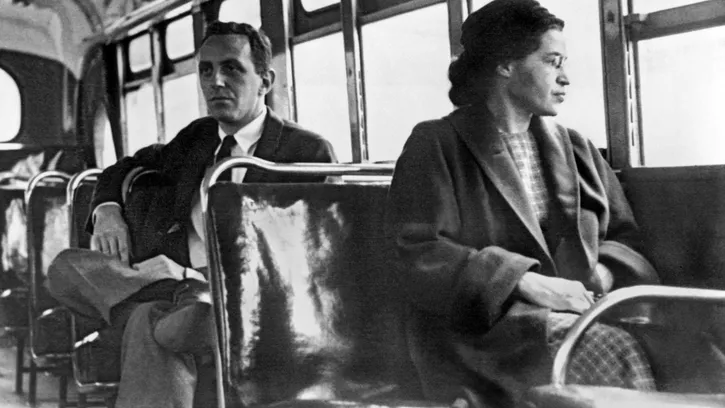
(December 1, 1955): Rosa Parks's refusal to relinquish her bus seat
This day in 1955, in violation of segregation laws in Montgomery, Alabama, Rosa Parks refused to surrender her bus seat to a white passenger and was arrested, sparking a 381-day bus boycott led by Martin Luther King, Jr.