- Basedment
- Posts
- WW2 Special Edition: The History Of The Global Order
WW2 Special Edition: The History Of The Global Order
Your daily dose of geopolitical updates and strategic analysis. Unbiased, but not unbased.

Editor-in-Chief
September 02, 2025
THE BRIEFING
Here’s what’s happening in geopolitics today.
Today’s headlines span from Asia to the Middle East, highlighting rising tensions and shifting alliances. We’ve got North Korea unveiling a new missile factory just as Kim heads to China, Greta Thunberg joining a flotilla bound for Gaza, and fresh concerns after Ursula von der Leyen’s plane faced suspected Russian GPS jamming.
In Yemen, thousands turned out to mourn slain Houthi leaders, while in Sydney, a man was arrested after ramming his car into the Russian consulate.
In our deep dive, today we explore how the current global order is being shaped through eyes of International relations in a special report on the anniversary of the start of WW2.
THE LAST 24 HOURS IN GEOPOLITICS
1. North Korean leader inspects new missile factory ahead of visit to China
North Korean leader Kim Jong Un toured a newly inaugurated missile factory, likely aimed at accelerating missile production through automation and streamlined assembly lines, according to state media. The visit came just before Kim’s first trip to China in six years, where he’ll join Xi Jinping and Vladimir Putin in Beijing for a military parade and diplomatic engagements. Analysts see this as a clear signal of continued military escalation and expanding ties with key U.S. adversaries.
read more
2. Greta Thunberg among those onboard flotilla of ships set to deliver aid to Gaza
Climate activist Greta Thunberg joined the Global Sumud Flotilla on a mission to deliver humanitarian aid to Gaza and challenge Israel's naval blockade, with support from activists across 44 countries. Thousands gathered to send off the flotilla, which organisers say is the largest of its kind, but the ships were forced to return due to a severe storm, delaying their journey. Thunberg framed the mission as a moral stand against international inaction and a protest against systemic violence that continues to deprive Gaza of essential supplies.
read more
3. Russia accused of jamming GPS of Ursula Von Der Leyen’s plane during Bulgaria trip
European Commission President Ursula von der Leyen’s plane experienced GPS jamming while approaching Plovdiv Airport in Bulgaria, forcing the pilot to rely on paper maps to land safely with Bulgarian authorities suspect Russian interference was to blame. The incident occurred during her regional tour of EU countries bordering Russia and Belarus and has elevated concerns about the increasing frequency of electronic warfare threats against civil aviation.
read more
4. Yemenis mourn the loss of Houthi Prime Minister & Government officials killed
Thousands of mourners packed into Sanaa’s largest mosque on Monday to pay respects to 12 senior Houthi officials killed in a rare Israeli strike on their leadership council. At the service, acting head Mohammed Miftah vowed vengeance and pledged a sweeping internal crackdown, pointing the finger at a “global alliance” of Israel, the U.S., Arab adversaries, and alleged internal spies. The group also retaliated immediately, launching a missile at an Israeli-linked oil tanker in the Red Sea, signalling that regional escalation is likely far from over.
read more
5. Man arrested for crashing car into Russian consulate in Sydney
A 39-year-old man was arrested in Sydney after deliberately driving his SUV into the gates of the Russian consulate in Woollahra on Monday morning, following reports he had entered the consulate grounds before hopping back into the vehicle and ramming the gate. The incident prompted a swift response from the Australian Federal Police and New South Wales Police, and two officers sustained minor injuries before the man was charged with multiple offences, including property damage, resisting arrest, knife possession, and drug-related charges.
read more
DAILY DEEP DIVE
MULTIPOLAR, BIPOLAR, UNIPOLAR AND BACK TO MULTIPOLAR?
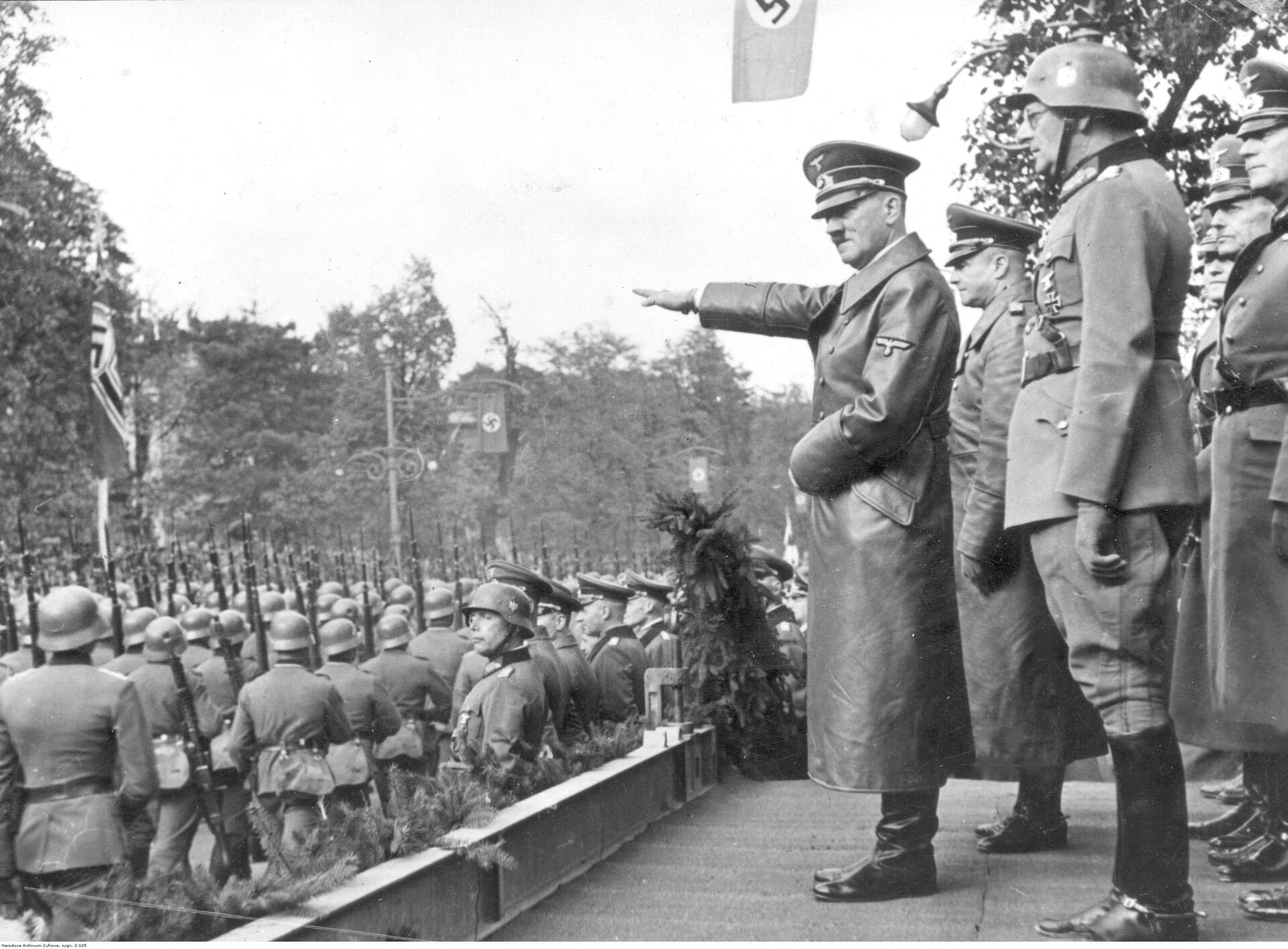
Today marks the anniversary of the outbreak of the Second World War, the bloodiest conflict in human history and arguably the most decisive in shaping modern geopolitics. The 20th century witnessed three major tectonic shifts in the global order. First, the gradual collapse of the multipolar balance of great powers that had defined the 19th century. Second, the emergence of the bipolar system, dominated by the United States and the Soviet Union through the Cold War. Finally, in 1991, the disintegration of the Soviet Union ushered in a unipolar moment, with the United States as the singular global hegemon. It can be argued that a significant portion of the current rebalancing of the world is due to state actors such as China, Russia and Iran wanting to return to a multipolar world order with the decline of the U.S as a hegemon.
End of the Traditional Great Powers
The Peace of Westphalia in 1648 is often seen as the birth of the modern state system, ending the Thirty Years’ War and the feudal order. It introduced sovereignty, non-interference, and defined borders, principles still central to international relations. Nearly two centuries later, the Congress of Vienna (1814–1815) responded to the Napoleonic Wars by institutionalizing a multipolar balance of power among Britain, Austria, Prussia, Russia, and later France. Through the “Concert of Europe,” it formalized diplomacy and collective conflict management, seeking stability by preventing any single state from dominating. Westphalia and Vienna thus marked two milestones: one established sovereignty, the other multipolarity.
End of the Old Guard
The Second World War reshaped global order and produced a bipolar system dominated by the United States and the Soviet Union. Former great powers such as the United Kingdom, though victorious, were sidelined, evident as early as the 1943 Tehran Conference, where Roosevelt and Stalin drew closer. Europe, crippled by territorial loss, economic collapse, and mass casualties, could no longer lead global affairs. Power shifted decisively from a multipolar Europe to a bipolar world defined by Washington and Moscow’s rivalry.
The Bipolar World
In this new bipolar order, global politics revolved around the competing ideologies and power blocs of the United States and the Soviet Union. Washington anchored the capitalist, liberal-democratic camp through alliances such as NATO and its economic dominance, while Moscow consolidated its sphere via the Warsaw Pact and a network of socialist states. The Cold War that followed was less about direct military confrontation than about influence , fought through proxy wars, nuclear deterrence, and economic and technological competition. The sidelining of traditional European powers meant the balance of the 19th century had definitively ended, replaced by a world in which two superpowers dictated the tempo of international relations, setting the stage for nearly half a century of geopolitical standoff.
One Empire Rises, One Falls
The collapse of the Soviet Union in 1991 ended the bipolar Cold War system and ushered in a unipolar world dominated by the United States. With unmatched military, economic, and cultural power, Washington shaped global institutions, advanced liberal democracy, and enforced a rules-based international order. This “unipolar moment,” as Charles Krauthammer called it, marked the peak of American primacy, though it proved more fragile and contested than first imagined. In 1989, just before the collapse of the Soviet Union, he published an essay titled “The End of History?” in The National Interest. He later expanded it into the 1992 book The End of History and the Last Man. Fukuyama argued that the end of the Cold War signaled not just the passing of an era but the “end point of mankind’s ideological evolution”, with liberal democracy and free-market capitalism emerging as the final form of government.
Return of multipolarity?
There have been strong arguments that the multipolar world is returning. One reason is that many analysts argue that the U.S has stagnated in its ability to exert influence politically, economically and culturally. But what are the trends we are seeing?
Decline of U.S. Soft Power
America’s cultural and ideological influence has weakened, with many states rejecting liberal democracy as the sole political model. Instead, alternative systems such as authoritarian capitalism or hybrid governance gain traction, further fragmenting global order.
Rise of China
China’s ascent is central to the broader return of multipolarity, as its economic weight and strategic reach increasingly rival U.S. primacy. By positioning itself as both a regional power in Asia and a global player through initiatives like the Belt and Road, Beijing challenges the unipolar dominance of the West. If current trajectories hold, China could emerge not just as one pole among many, but as a potential hegemon capable of reshaping the international order on its own terms.
Russia’s Resurgence
Although weakened economically, Russia continues to assert itself militarily and geopolitically. Its campaigns in Ukraine, involvement in the Middle East, and outreach across Africa. While we can debate as to how strong this resurgence is, especially after the gridlock in Ukraine - it highlights that western dominance can be openly contested.
Middle Powers Rising
States such as India, Turkey, Brazil, and Saudi Arabia increasingly follow their own strategic interests rather than aligning with Washington or Beijing. By balancing ties across rival blocs, they shape regional balances and add complexity to the global system. This could be compared to Yugoslavia’s unique place in the Bipolar world in the 20th century.
Institutional Alternatives
The growth of groupings like BRICS and the Shanghai Cooperation Organisation reflects a move toward non-Western political and financial frameworks, challenging the monopoly once held by Western-led institutions such as NATO, the IMF, and the World Bank. Yet their long-term effectiveness remains uncertain. BRICS and the SCO are composed of highly autonomous states whose geopolitical interests often diverge, making cohesive action difficult. By contrast, Western liberal institutions have historically functioned with greater efficiency, as international liberalism suggests that like-minded democratic states, bound by shared values and political traditions, can cooperate more smoothly through common institutional frameworks.
Do you agree the multipolar world is returning?
Sources:
Available upon request.
TWEET OF THE DAY
No caption needed…?
Multipolarity: It's coming!
— Constantin von Hoffmeister (@constantinvonh)
2:37 PM • Aug 31, 2025
TODAY IN HISTORY
(September 1, 1939): On September 1, 1939, Nazi Germany invaded Poland, sparking the Second World War, the deadliest conflict in human history. Over six years, an estimated 70–85 million people were killed, including ~27 million Soviets, ~15–20 million Chinese, and 6 million Jews in the Holocaust. The war’s devastation ended Europe’s dominance and ushered in a new world order led by the United States and Soviet Union.