- Basedment
- Posts
- Xi's Latest Purges And What This Signals
Xi's Latest Purges And What This Signals
Xi continues to hollow out the military arm of the CCP, with more generals under investigation as the battle for Taiwan looms.

Editor-in-Chief
January 26, 2026
THE BRIEFING
Here’s what’s happening in geopolitics today.
Today’s briefing spans fresh trade threats from Washington aimed at Canada, protests erupting in Minneapolis after another fatal shooting tied to federal enforcement, and stalled U.S.-brokered peace talks as Russia intensifies strikes on Ukraine.
We’re also watching Myanmar push through the final stage of a widely criticised election and a diplomatic handover in Washington as Greg Moriarty prepares to replace Kevin Rudd as Australia’s ambassador.
In today’s deep dive, we turn to Beijing as Xi continues a new round of purges against the military arm of the CCP.
THE LAST 24 HOURS IN GEOPOLITICS
1. Trump threatens Canada with 100% tariff over China trade talks
Trump has threatened to impose a 100 % tariff on all Canadian imports if Canada goes ahead with a proposed trade deal with China, sharply escalating trade tensions between the two neighbours. Trump made the warning on social media, accusing Canadian Prime Minister Mark Carney of risking Canada becoming a “drop-off port” for Chinese goods entering the U.S. market and saying such a deal would prompt immediate tariffs on Canadian products. The threat follows Carney’s recent negotiations in Beijing that secured reduced tariffs on Chinese electric vehicles and other Canadian exports, and comes amid a broader deterioration in U.S.–Canada relations, including Trump rescinding Canada’s invitation to his “Board of Peace.”
read more
2. Protests erupt in Minneapolis after second US citizen shot dead by agents
Protests erupted in Minneapolis on Saturday after federal agents fatally shot a 37-year-old U.S. citizen during a large immigration enforcement operation, marking the second such fatal shooting in the city this month. Authorities said the man was shot during an attempted confrontation with Border Patrol agents, while local leaders and demonstrators have questioned the circumstances and called for the end of the federal crackdown. Hundreds of protesters clashed with officers, with law enforcement deploying tear gas and declaring an unlawful assembly amid broader outrage over aggressive federal operations in Minnesota.
read more
3. U.S. brokered peace talks break off without deal after Russian bombardment of Ukraine
A second round of U.S.-mediated peace talks between Ukraine and Russia in Abu Dhabi concluded on Saturday without reaching a deal, though all sides said they remain open to further discussions as early as next weekend. The negotiations focused on potential parameters to end the conflict but failed to bridge key differences, particularly over Russia’s demand that Ukraine cede control of parts of Donetsk that Kyiv refuses to relinquish. The talks were overshadowed by a massive overnight Russian bombardment that knocked out power for more than a million Ukrainians and caused casualties, a move Kyiv’s officials condemned as undermining diplomatic efforts.
read more
4. Final phase of Myanmar’s election underway, military-backed party set to win
Myanmar has entered the final phase of its three-stage general election, with polling stations open across remaining townships amid a civil war and low turnout, as the military-backed Union Solidarity and Development Party (USDP) is poised to secure a majority of seats. The vote has been widely criticised by the United Nations, Western governments and rights groups as neither free nor fair. Voter participation in earlier rounds hovered around 50–55%, well below past elections, and fighting has prevented voting in many conflict-affected areas, leading critics to describe the process as engineered to entrench military rule.
read more
5. Greg Moriarty to succeed Kevin Rudd as Australian ambassador to the U.S.
Defence Department Secretary Greg Moriarty will replace former prime minister Kevin Rudd as Australia’s ambassador to the United States, with the appointment taking effect after Rudd’s departure at the end of March. Moriarty, a senior public servant with extensive diplomatic and national-security experience was praised by Albanese as an “outstanding Australian public servant.” Rudd, who has served in Washington since March 2023, is stepping down a year early and will take up a leadership role at the Asia Society’s Centre for China Analysis, while the U.S. government was consulted on Moriarty’s appointment as part of the normal diplomatic process.
read more
DAILY DEEP DIVE
Xi And His Love For A Good Purge
Context
The current wave of purges within China’s military leadership is the culmination of a long-running campaign by Xi Jinping to reassert control over the People’s Liberation Army (PLA), but its scale has intensified sharply since late 2023. The most significant inflection point came in October 2025, when eight senior generals were expelled from the Communist Party on graft charges, including China’s then number-two general, He Weidong. Several had served directly under Xi and alongside Zhang Youxia on the Central Military Commission (CMC).
These October expulsions followed earlier purges targeting the PLA Rocket Force in 2023, which exposed extensive corruption in China’s nuclear and missile establishment. Investigations then widened to procurement, equipment development, and political departments — the institutional backbone of the PLA. The latest probes, announced in January 2026, placed Zhang Youxia and Liu Zhenli under investigation, effectively hollowing out the CMC itself.
Officially, the purges are framed as anti-corruption measures. Analytically, they reflect deeper concerns: entrenched graft, factional rivalries, and doubts over loyalty and competence at the highest levels. Xi’s reforms have removed hundreds of officers, yet persistent corruption suggests structural failure rather than isolated misconduct. The result is a PLA undergoing continuous leadership disruption at a moment when Xi is demanding accelerated modernisation and readiness for high-end contingencies, including Taiwan.
Our Analysis
Xi Jinping has effectively hollowed out China’s military command. That alone tells us something important: either he believes the senior leadership is incapable, irredeemably corrupt, insufficiently loyal to his vision — or all three. The immediate question, however, is not why the purge is happening, but what comes next. Who replaces these figures matters far more than who has fallen. There are three broad, overlapping explanations for what we’re seeing — and none of them are encouraging for China’s ability to fight a major war.
First, the most pessimistic: the PLA may be so deeply corrupted that anyone above a certain rank is either directly involved or compromised through proximity. If corruption is systemic rather than episodic, purges do not solve the problem — they merely expose how shallow the bench truly is.
Second, Xi may believe the military is politically unreliable. Loyalty to Xi Jinping personally, not competence alone, is the defining currency of survival. That raises a familiar risk: officers selected for ideological alignment rather than operational excellence.
Third, Xi himself may be driving instability. Unrealistic modernisation timelines, rigid performance expectations, and an intolerance for failure could be producing constant leadership churn. In that scenario, purges become a substitute for structural reform — a sign of managerial weakness, not strength. Generals will rarely agree to a war if they know it cannot be won, this may be a reason the “untouchable general” was finally let go, or it may be due to Xi’s own leadership instability.
There is also a strategic dimension. Xi may be studying Vladimir Putin’s failures in Ukraine, where institutionalised corruption hollowed out intelligence, logistics, and command. If Taiwan is the objective, Xi may be trying to pre-empt that mistake. We’re clearly seeing the military learn from the Ukraine conflict, it would not surprise me that such lessons are being taken politically.
But timing matters. We do not know when a Taiwan operation might occur. If these purges are happening too close to a potential conflict, the historical parallel is uncomfortable. Joseph Stalin’s pre-war purges crippled the Red Army just before its greatest test. Xi may believe he is strengthening the PLA. History suggests he could be doing the opposite.
Sources
News/Journal sources available upon request, not shown to maintain visual integrity of page.
TODAY IN HISTORY
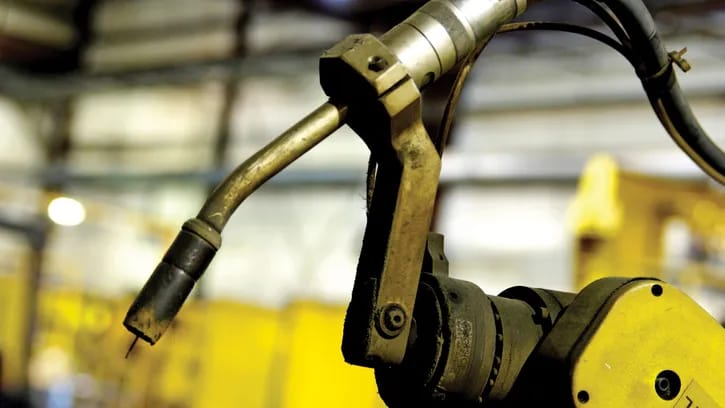
(January 25, 1979): Man killed by robot for the first time
On this day in 1979, a factory worker was killed by a robot. Robert Nicholas Williams climbed into a shelving unit to investigate an assembly-line malfunction, where he was struck in the head by an industrial robot and killed. The incident was the first recorded instance of a person being killed by a robot, and it broke science-fiction author Isaac Asimov's first law of robotics: “a robot may not injure a human being or, through inaction, allow a human being to come to harm.”