- Basedment
- Posts
- Zelensky In Kupiansk As Siversk Falls
Zelensky In Kupiansk As Siversk Falls
Kupiansk remains fiercely contested, with Ukrainian advances disrupting Russian positions amid constant counterattacks and conflicting claims. Siversk, meanwhile, has fallen after a rapid Russian push forced Ukrainian forces to withdraw, ending years of defensive control.

Editor-in-Chief
December 13, 2025
THE BRIEFING
Here’s what’s happening in geopolitics today.
A heartbreaking scene in Gaza, renewed border warfare in Southeast Asia, and a budget-driven rethink of Switzerland’s F-35 order set the tone for another turbulent news cycle.
Leaders gathered in Turkmenistan while Israel wrapped up major naval drills with the U.S., rounding out a day defined by both conflict and diplomacy.
In today’s Deep Dive, we take a look at Kupiansk once more as Zelensky makes a visit and we pan south as the fortress city of Siversk finally falls.
THE LAST 24 HOURS IN GEOPOLITICS
1. Baby dies of exposure in flooded tent as storm Byron batters Gaza
An eight-month-old baby girl, Rahaf Abu Jazar, died from exposure to the cold after torrential rains from Storm Byron flooded her family’s tent in the displaced persons camp in Khan Younis, Gaza, officials and medics said. Hundreds of tents sheltering families displaced by more than two years of conflict were inundated as the storm lashed the enclave, overwhelming civil defence services that were already struggling with fuel shortages and damaged equipment. The flooding has compounded Gaza’s humanitarian crisis, with U.N. and aid agencies warning that thousands of displacement sites are at high risk.
read more
2. Thailand-Cambodia fighting enters 5th day, Thai PM confirms Trump call
Border clashes between Thailand and Cambodia have entered a fifth consecutive day, with exchanges of artillery, rockets and other weapons along their disputed frontier, killing at least 20 people and injuring more than 260 others as both sides trade blame for reigniting hostilities. Thai Prime Minister Anutin Charnvirakul confirmed he is scheduled to speak with U.S. President Donald Trump later today as Washington seeks to revive a ceasefire that Trump helped broker earlier this year, with the goal of halting the violence.
read more
3. Swiss to reduce F-35 fighter jet order from U.S. as costs rise
Switzerland announced it will reduce the number of Lockheed Martin F-35A fighter jets it plans to purchase from the United States as rising production and contract costs push the programme beyond its original budget of 6 billion Swiss francs. The original plan, approved by Swiss voters in a 2020 referendum, called for 36 jets, but Bern has now instructed its defence ministry to acquire as many aircraft as possible within the approved financial ceiling, leaving open the possibility of revisiting the full purchase later. The cost dispute stemmed from a misunderstanding over whether the contract included a fixed-price guarantee, with Switzerland declining to approve higher payments while reaffirming its commitment to modernise its air force.
read more
4. Russian, Turkish, Iranian and other leaders meet in Turkmenistan for summit
The Israeli Navy and the U.S. Navy’s 5th Fleet completed a five-day joint maritime exercise called “Intrinsic Defender” in the Mediterranean Sea and Red Sea, designed to bolster long-standing cooperation between the two forces. The drill included a wide range of activities such as responses to maritime threats, mine and sabotage neutralisation, boarding operations, diving and search tasks, and building a shared air-maritime operational picture with a U.S. P-8 Poseidon aircraft and an Israeli Saar 5 corvette.
read more
5. Israeli Navy wraps up five-day drill with U.S. Navy’s 5th fleet
The Israeli Navy and the U.S. Navy’s 5th Fleet completed a five-day joint maritime exercise called “Intrinsic Defender” in the Mediterranean Sea and Red Sea, designed to bolster long-standing cooperation between the two forces. The drill included a wide range of activities such as responses to maritime threats, mine and sabotage neutralisation, boarding operations, diving and search tasks, and building a shared air-maritime operational picture with a U.S. P-8 Poseidon aircraft and an Israeli Saar 5 corvette.
read more
DAILY DEEP DIVE
KUPIANSK AND SIVERSK
KUPIANSK
Recent reporting around Kupyansk highlights how fragmented and contested the information space has become. For instance, since yesterday's report another 180 flip has occurred. According to DeepState mapping, Ukrainian forces have blocked Russian units inside the city, cleared the entire northwestern outskirts, and are continuing operations to eliminate remaining Russian pockets in central districts. President Zelensky visited positions roughly 1.3 km from Russian lines and around 500 meters from the grey zone — a symbolic move suggesting Ukrainian confidence in local control. There can be a debate whether he actually was there or not, nonetheless it is being seen as a big morale boost, at least online.
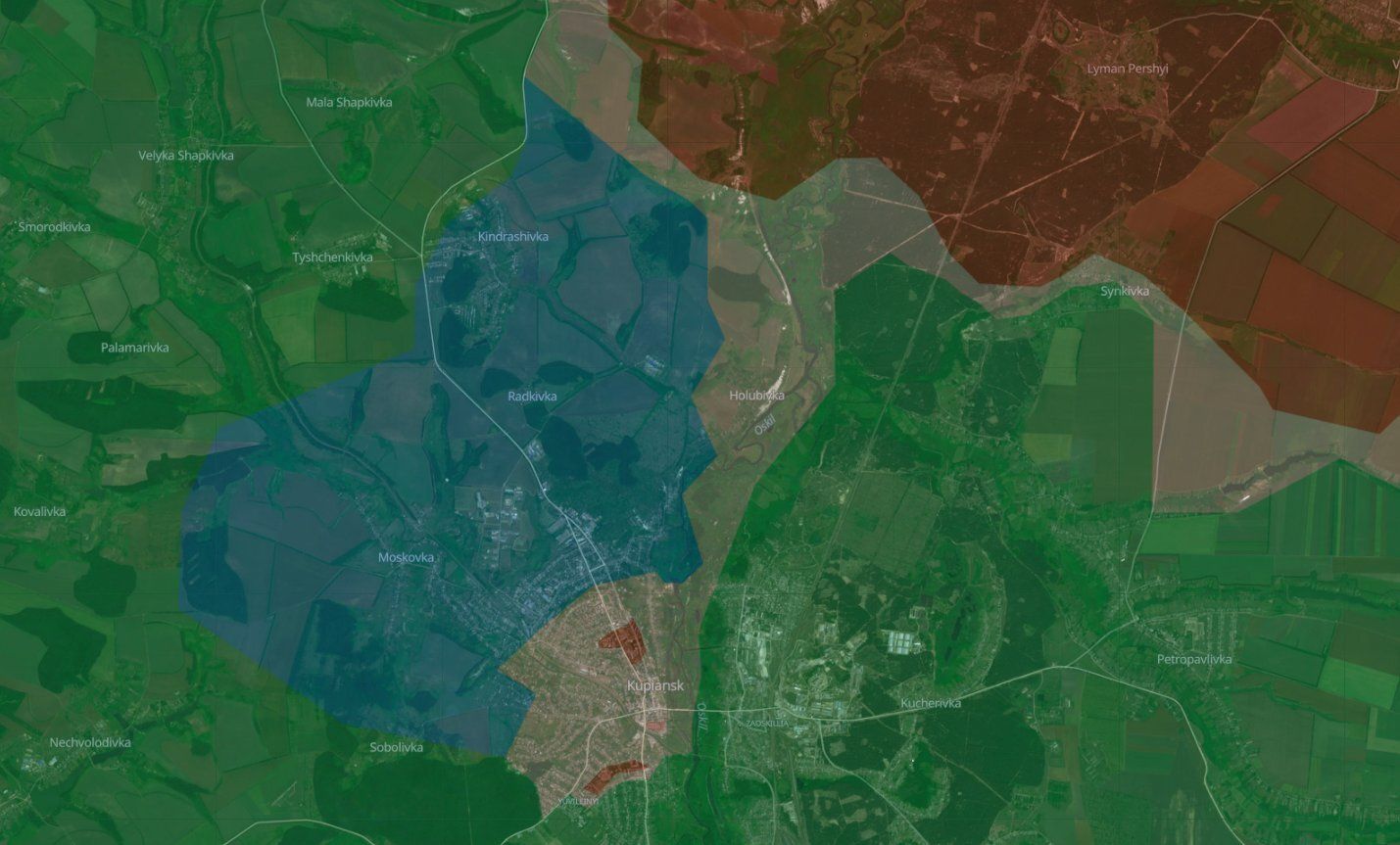
VERY big claims by Deepstate here, we will find out in the coming days if they are true.
Some Russian military bloggers have provided credence to these gains. Some claim Russian logistics into western Kupyansk have been severed, arguing that areas such as Moskovka and Radkivka now sit behind Ukrainian lines. At the same time, these same sources acknowledge ongoing counterattacks, indicating that control remains contested rather than settled.
More cautious Ukrainian and independent observers have pushed back on claims of a sudden collapse or full Russian encirclement. They argue that while Ukrainian forces have made incremental gains and disrupted Russian supply routes, there is no clear evidence of a decisive breakthrough or a complete fall of Russian positions across the city. Instead, the situation appears highly fluid, with overlapping positions, localized advances, and constant counter-maneuvering.
The timing is notable. These claims emerged shortly after Russian Chief of the General Staff Valery Gerasimov stated that 15 Ukrainian battalions had been surrounded in Kupyansk and that the city had effectively been taken — a statement not supported by subsequent geolocated evidence. The contrast between that declaration and on-the-ground reporting has fueled speculation that some narratives, on both sides, may be racing ahead of confirmed facts.
SIVERSK
The rapid fall of Siversk has come as a shock precisely because of how long the town held. For more than three years, Ukrainian defenses on Siversk’s eastern approaches stalled repeated Russian assaults, turning what was once a town of 10,000 into a quiet fortress anchoring the wider Donbas line. That context makes the speed of recent events striking.
Russian forces from the 123rd and 6th Motor Rifle Brigades entered northeastern Siversk and, within days, raised flags across the settlement. Geolocated imagery shows roughly 30 Russian flags planted throughout the town, suggesting control over most — if not all — urban areas. Ukrainian units appear to have withdrawn in good order rather than collapsing outright, leaving behind prepared positions and fallback lines on surrounding heights.
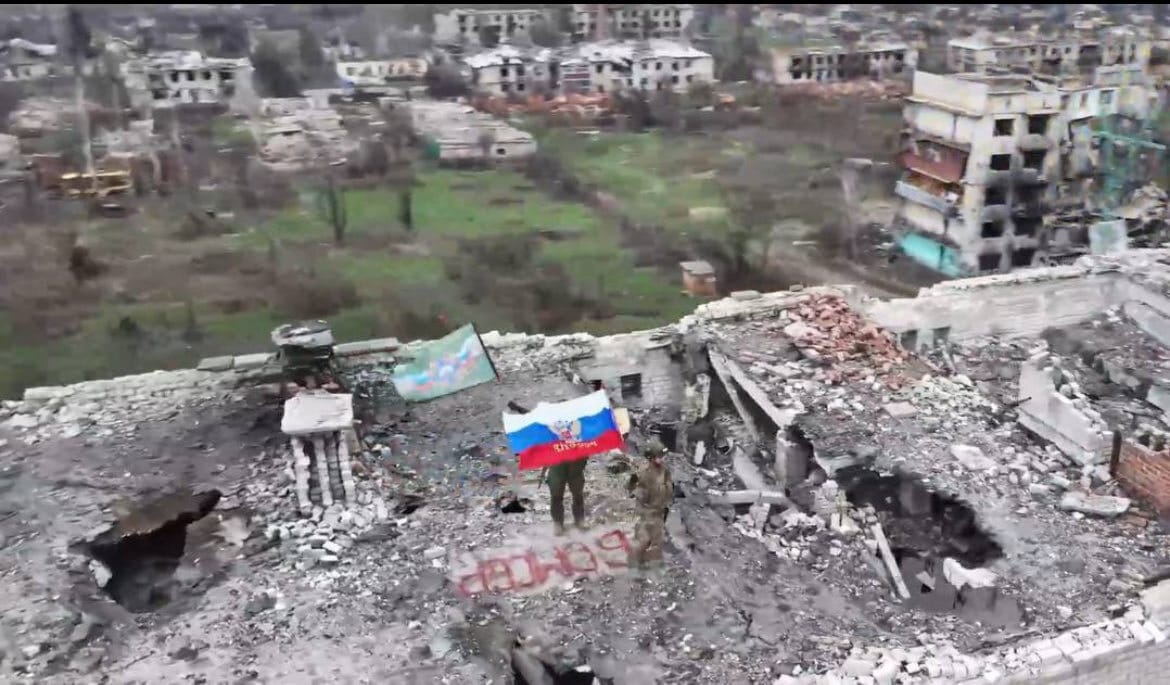
Russian flags in Siversk
In many ways, Ukraine has become a victim of its own success here. Siversk’s defenses were so effective for so long that the sector was no longer treated as urgent compared to flashpoints like Avdiivka, Kupyansk, or Chasiv Yar. Reinforcements, ammunition, and engineering effort were prioritized where cracks were visible. Siversk, by contrast, looked stable — until it suddenly wasn’t. Earlier in the year, Russia finally consolidated the forests (what’s left of them) north of Siversk which gave the high ground to Russian forces. This provided better surveillance and firing positions, which assisted the gradual push east and south of Siversk.
This does not mean an immediate Russian breakthrough toward Slovyansk. Russian forces remain months away from mounting a credible assault on the city. To do so, they would need to complete the seizure of Lyman and advance roughly 14 kilometers while crossing the Siverskyi Donets River, or push 30 kilometers west from Siversk — both major undertakings. Notably, Russia has spent over 41 months advancing just 19 kilometers from Lysychansk to central Siversk. The fall of Siversk is therefore less about sudden Russian operational brilliance and more about cumulative pressure, force rotation issues, and shifting Ukrainian priorities. However, in attritional warfare it would be wrong to look at kilometres gained as metrics of success. As we have just seen, frontlines can collapse at any moment. Russia’s ideal scenario is what we just saw in Siversk — strong resistance, with sudden collapse due to extreme pressure — but on a nationwide scale.
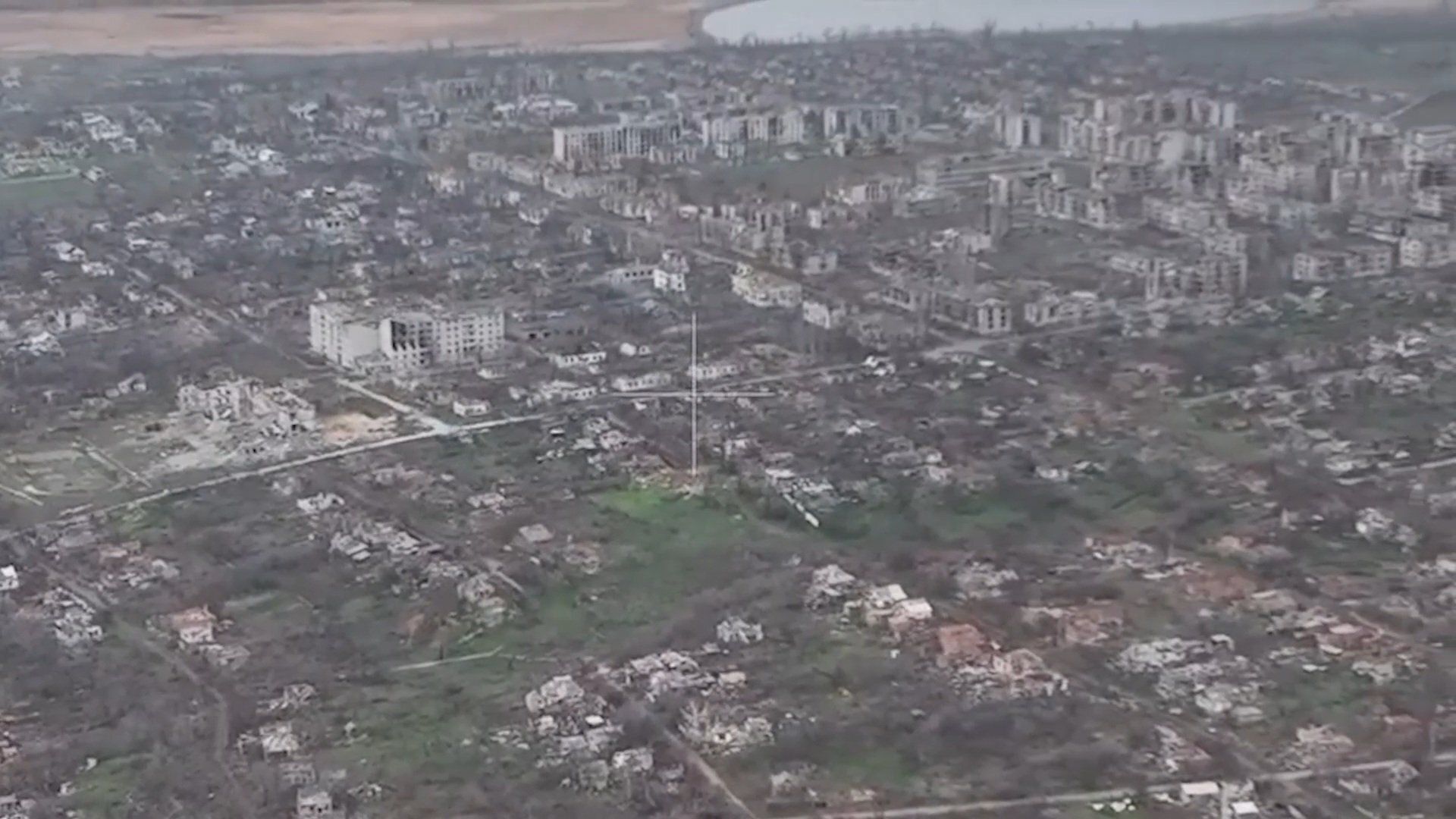
The fortress falls, after three years.
Sources:
News/Journal sources available upon request, not shown to maintain visual integrity of page.
TODAY IN HISTORY
(December 12, 1925): The first motel
The world's first motel opened on this day in 1925. Located in San Luis Obispo, the Milestone Mo-Tel gave motorists a place to stop as they drove between San Francisco and Los Angeles.