- Basedment
- Posts
- Zelensky's Peace Plan (Part 2)
Zelensky's Peace Plan (Part 2)
This analysis will break down the political, military, and territorial realities shaping Zelensky’s proposal—and why its core compromises may prove impossible to implement.

Editor-in-Chief
December 25, 2025
THE BRIEFING
Here’s what’s happening in geopolitics today.
From fresh airstrikes and ceasefire strain in southern Lebanon to contested ballots in Central America, today’s headlines span security flashpoints and power politics across four continents.
We’re also tracking North Korea’s latest show of military ambition, growing Western pressure over West Bank settlements, and a familiar strongman bid for more time in office in Central Africa.
In today’s Deep Dive, we’ll be assessing the fine print in Zelensky’s new revised peace plan and how it does not fix the territorial “elephant in the room”.
THE LAST 24 HOURS IN GEOPOLITICS
1. Israel strikes Southern Lebanon as deadline to disarm Hezbollah nears
Israel has carried out a series of air and drone strikes in southern Lebanon in recent days, targeting what it says are Hezbollah infrastructure, weapons sites and operatives as a year-end deadline approaches for the group’s disarmament under a U.S.-backed ceasefire framework. Israeli strikes near the coastal city of Sidon reportedly killed several people, with the military asserting it was acting against Hezbollah fighters, while Lebanese officials have denounced the attacks and denied links between some victims and the group. The military actions come alongside diplomatic efforts to implement the ceasefire, with Lebanon’s government working to integrate state forces into former Hezbollah-controlled areas and outside observers warning the situation strains both the ceasefire and regional stability.
read more
2. Trump-backed candidate Asfura wins Honduras presidential election
Former Tegucigalpa mayor Nasry “Tito” Asfura, a conservative candidate backed by Trump, was declared the winner of Honduras’s November 30 presidential election by the National Electoral Council, securing 40.27 % of the vote against Salvador Nasralla’s 39.5 % after weeks of delays and a manual recount. Despite the narrow margin and allegations of technical issues and fraud by opposition figures, the electoral body confirmed the result on December 24, and U.S. Secretary of State Marco Rubio urged all parties to respect the outcome to ensure a peaceful transition. Asfura, whose campaign focused on jobs, education and security, is due to assume office on January 27, 2026.
read more
3. North Korea’s Kim and daughter inspect submarine build
North Korean leader Kim Jong Un visited a shipyard to observe the construction of a nearly completed 8,700-ton nuclear-powered submarine, accompanied by his daughter Ju Ae, who state media often highlights as a potential heir, according to official reports. KCNA said the vessel, part of Pyongyang’s broader effort to modernise its navy, is intended to be capable of launching surface-to-air missiles and underscores a strategic push to expand undersea capabilities. The visit also came alongside publicised oversight of long-range surface-to-air missile tests.
read more
4. UK, Canada and Germany condemn Israel for 19 new West Bank settlements
The United Kingdom, Canada and Germany, along with a group of 14 nations, issued a joint statement condemning Israel’s security cabinet approval of 19 new settlements in the occupied West Bank, saying the move violates international law and risks fuelling instability in the region. The statement called on Israel to reverse the decision and curb settlement expansion in line with U.N. Security Council Resolution 2334, warning that such unilateral actions could undermine peace efforts, including the fragile implementation of a Gaza ceasefire plan.
read more
5. Russia-ally Touadera seeks third term in Central African Republic
Central African Republic President Faustin-Archange Touadéra, a close ally of Russia, is seeking a third term in office in the December 28 presidential election, enabled by a 2023 constitutional referendum that abolished presidential term limits. He is campaigning on security gains after peace deals with rebel groups and support from Russian mercenaries and Rwandan forces, but analysts say his control of state institutions and incumbency make him a strong favourite against six opposition candidates.
read more
DAILY DEEP DIVE
Zelensky Peace Plan
Ukrainian President Volodymyr Zelensky has laid out a revised peace framework that sharply clarifies where Kyiv and Washington are aligned—and where negotiations remain fundamentally stuck—as talks move into their most politically sensitive stage.
According to Zelensky, Ukraine and the United States are broadly in agreement on most elements of a potential settlement, particularly the security architecture meant to deter any future Russian invasion. Central to this is a Western-backed guarantee allowing Ukraine to maintain a peacetime force of up to 800,000 troops, effectively anchoring Ukrainian security outside of formal NATO membership. The framework also reaffirms Ukraine’s path toward European Union accession. Zelensky is pushing for a precise entry date to be written into the agreement, framing it as a concrete political guarantee rather than a symbolic promise—though it remains unclear whether EU member states are prepared to commit to such a timeline.
Territory remains the most difficult unresolved issue. Ukrainian-held areas of Donetsk Oblast are described by Zelensky as “the most complex point” of the talks. Earlier US–Russia drafts reportedly called for Ukrainian forces to withdraw from these areas and convert them into a neutral demilitarised zone—an approach Kyiv rejected outright, arguing it would amount to ceding territory Russia has failed to capture militarily. Zelensky’s revised proposal reframes this concept: instead of a unilateral withdrawal, both Ukrainian- and Russian-held territory would form part of a demilitarised or “free economic zone,” with reciprocal pullbacks and an internationally monitored buffer separating the two sides. The aim, as Zelensky put it, is to find a format that is “not a withdrawal,” while still allowing negotiations to move forward.
U.S Economic Plans
The plan also tightly integrates US economic interests into Ukraine’s postwar recovery. It proposes the creation of a Ukraine Development Fund focused on high-growth sectors such as technology, data centres, artificial intelligence, and energy infrastructure. US and Ukrainian companies would jointly participate in reconstruction, while the framework explicitly references the extraction of Ukrainian minerals and natural resources—an issue the Trump administration has elevated as a strategic priority. Several recovery funds would ultimately aim to mobilise up to $800 billion, overseen by a “leading global financial leader,” widely understood to be BlackRock, which has been drawn into the talks by Washington.
Another flashpoint is the Russian-occupied Zaporizhzhia nuclear power plant, Europe’s largest. Kyiv rejected a US proposal for shared control involving Moscow, instead suggesting a Kyiv–Washington joint venture that would allow the US to manage any separate arrangements with Russia.
Moscow’s Response
Moscow’s response has been cool. The Kremlin confirmed Vladimir Putin has been briefed, but senior officials have dismissed the talks as unconstructive. Russia continues to insist on full control of Donetsk—by negotiation or force—and has rejected any discussion of returning the nuclear plant, underscoring how far apart the two sides remain despite Washington’s efforts to bridge the gap.
Our Comment
Look, this new peace plan has two things I want to focus on. First, as always, it’s at least a positive step that there are some constructive discussions taking place—this time between the United States and Ukraine. The more these talks progress, the greater the chance that, eventually, the suffering can come to an end.
On the other side of the coin, it feels like everyone is still dancing around the elephant in the room: neither side wants to withdraw. This has been a red line since the very start of the war. Zelensky himself said that eastern Donetsk is the most “complex point,” arguing that Kyiv cannot give Russia territory it has not actually taken. For both practical military reasons and domestic political realities, Zelensky cannot withdraw from Donetsk—it would be political suicide. There is also the issue of the hundreds of kilometres of layered defensive positions that Ukraine has built across the region.
For Putin, the position is just as clear. He has repeatedly stated that Russia intends to take all four claimed oblasts, or at the very least Donetsk. Trying to meet in the middle through the creation of an economic or demilitarised zone is therefore unlikely to work. And if you read the fine print, Zelensky’s proposal also implies that Russia would need to withdraw from an unspecified amount of territory in Donetsk to create such a zone—which, realistically, is not going to happen.
Sources
News/Journal sources available upon request, not shown to maintain visual integrity of page.
TODAY IN HISTORY
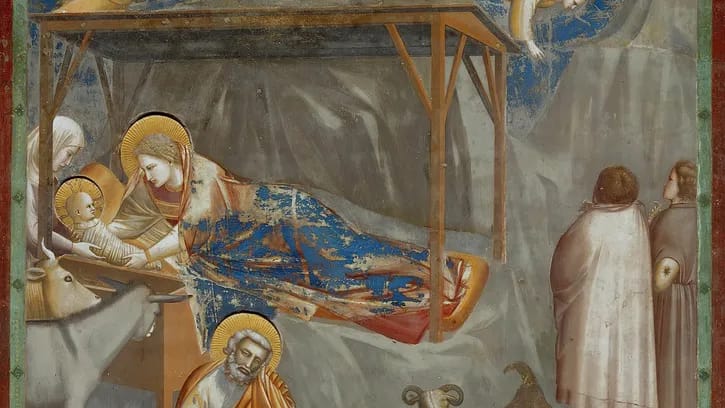
(December 25, 352): December 25 became Christmas
Pope Liberius celebrated the first official Christmas mass in Rome on this day in 352. The birth of Jesus Christ had been celebrated as many as two centuries earlier, but it was this mass that ensured Christmas's place on December 25 in the Roman Catholic calendar.